
What Is a Consolidated e-Invoice?
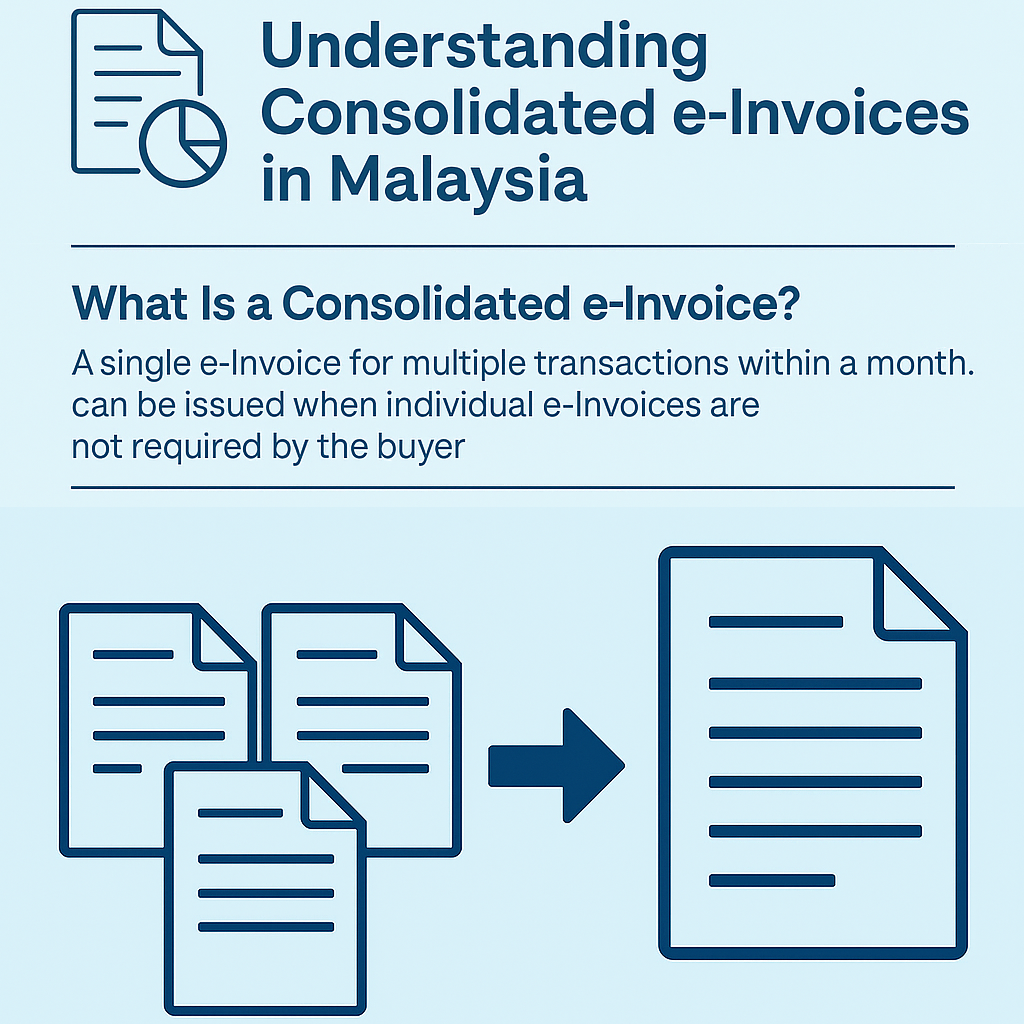
A consolidated e-Invoice is a single electronic invoice summarizing multiple transactions made within a specific period—typically a month—especially when individual e-Invoices are not required by the buyer. This method is ideal for high-volume, low-value transactions in sectors like retail, hospitality, and e-commerce.
What Should a Consolidated e-Invoice Contain?
A valid consolidated e-Invoice must include:
- Buyer Info: Use “General Public” and TIN “EI00000000010”.
- Invoice Description: Reference numbers of individual receipts.
- Total Amount: Sum of all transactions.
- Submission Deadline: Within 7 calendar days after month-end.
When Can Businesses Use Consolidated e-Invoices?
Businesses may issue consolidated e-Invoices only when buyers do not request individual invoices. This is typical in B2C transactions. During the interim relaxation period, all industries may temporarily use consolidated e-Invoices more broadly.
Excluded Transactions and Industries
Certain industries and transactions are excluded from using consolidated e-Invoices:
Industries Excluded:
- Automotive
- Aviation
- Construction
- Luxury goods
- Utilities
- Financial institutions
- Government-related
- Export of goods
Transaction Criteria:
- Transactions above RM10,000 per invoice (effective 1 Jan 2026)
- B2B transactions requiring validated e-invoices
Consolidated e-Invoice Quick Reference
Aspect | Details |
|---|---|
Definition | A single e-Invoice that aggregates multiple transactions over a month where individual e-Invoices were not requested (mainly B2C). |
Purpose | Simplifies reporting for high-volume, small-value transactions (e.g. retail, F&B, hospitality). |
Buyer Details |
|
Content Requirements |
|
Submission Timeline | Within 7 calendar days after month-end |
When Allowed |
|
When NOT Allowed |
|
Industries Excluded (from 1 Jan 2026) |
|
Special Cases |
|
Simplify e-Invoicing with Cloud Accounting Tools
Managing and submitting consolidated e-Invoices is much easier with cloud accounting platforms like Bukku and Xero. These tools:
- Automatically track and compile monthly transactions
- Generate compliant e-Invoices with required details
- Integrate with LHDN’s MyInvois Portal
- Reduce manual errors and save time
Whether you’re a small business or a growing enterprise, cloud accounting solutions streamline your e-Invoicing workflow and ensure compliance with LHDN regulations.
Need Help Getting Started?
If you’re unsure how to implement consolidated e-Invoicing or want to integrate Bukku or Xero into your business, contact us today. Our team is ready to guide you through setup, compliance, and automation.