LHDN e‑Invoice Compliance: What Businesses Must Know
On 15 December 2025, the LHDN introduced a detailed framework outlining how e‑Invoice compliance reviews will be conducted.
This marks a significant step in the country’s transition toward a more transparent, data-driven tax ecosystem, and signals that enforcement will now be more structured, consistent, and far-reaching.
For businesses, particularly SMEs and growing enterprises, the message is clear: compliance is no longer just about filing taxes; it’s about maintaining clean, reconcilable, and auditable digital records at all times.
A Structured Approach to Compliance Reviews
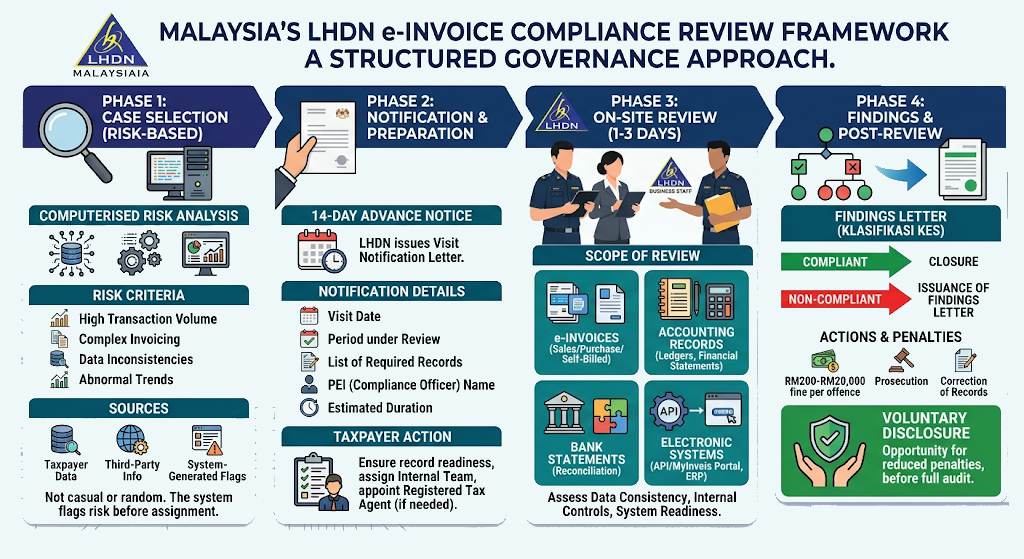
Under the new framework, LHDN will carry out compliance reviews using a risk-based approach. This means that businesses are not reviewed at random; instead, they are selected based on patterns, inconsistencies, or anomalies identified in their financial and e‑Invoice data.
The review process may include:
- Cross-checking submitted e‑Invoices against reported income
- Comparing transaction records with bank statements
- Identifying gaps, duplicates, or discrepancies in invoice issuance
- Analysing reporting trends across periods
Importantly, the review scope can cover up to two years of records, allowing LHDN to assess patterns over time rather than isolated incidents.
Long Reach: Prosecution Exposure up to 12 Years
While the compliance review period may span two years, the implications of non-compliance extend far beyond that period. According to the framework, prosecution action may be pursued for up to 12 years if serious discrepancies, underreporting, or fraudulent activities are identified.
This long look-back period highlights the importance of maintaining historical data integrity. Businesses cannot afford to treat compliance as a short-term exercise, it must be embedded into ongoing operational processes.
What Exactly Will LHDN Examine?
LHDN’s compliance reviews are comprehensive and extend beyond just e‑Invoices. Businesses should expect scrutiny across multiple data sources, including:
1. e‑Invoices and Supporting Documents
- Invoice issuance timing and accuracy
- Proper classification of transactions
- Alignment with LHDN’s e‑Invoice requirements
2. Receipts and Sales Records
- Consistency between recorded sales and issued invoices
- Detection of missing or duplicate receipts
3. Financial Records
- Profit and loss statements
- General ledger entries
- Income declarations
4. Bank Statements
- Matching of inflows and outflows against reported transactions
- Identification of unreported revenue
- Verification of payment trails
This multi-layered approach ensures that discrepancies cannot easily go unnoticed.
What This Means for Businesses
The introduction of this framework raises the bar for tax compliance in Malaysia.
Businesses are now expected to operate with a level of financial discipline and data consistency that aligns with real-time digital reporting.
Key implications include:
- Greater audit readiness: Businesses should always be prepared for review, not just during tax filing periods
- Reduced tolerance for errors: Even minor inconsistencies across systems can trigger risk alerts
- Increased reliance on digital accuracy: Manual processes and disconnected systems can lead to costly mistakes
In short, compliance is shifting from a periodic activity to a continuous, integrated business function.
How Businesses Can Prepare
To navigate this new landscape effectively, businesses should adopt a proactive approach to compliance. Here are key steps to get started:
1. Reconcile e‑Invoice Data Regularly
Ensure that e‑Invoice records are consistently aligned with:
- Reported income
- Accounting system data
- Financial statements
Regular reconciliation helps identify discrepancies early—before they escalate into compliance risks.
2. Strengthen Record-Keeping Practices
Maintain well-organized, complete records, including:
- Invoices and receipts
- Supporting documentation
- Payment records
Good record-keeping is not just a compliance requirement, it serves as your first line of defense during reviews.
3. Integrate Systems Where Possible
Disconnected systems increase the risk of data inconsistencies. Consider integrating:
- Accounting software
- Payroll software
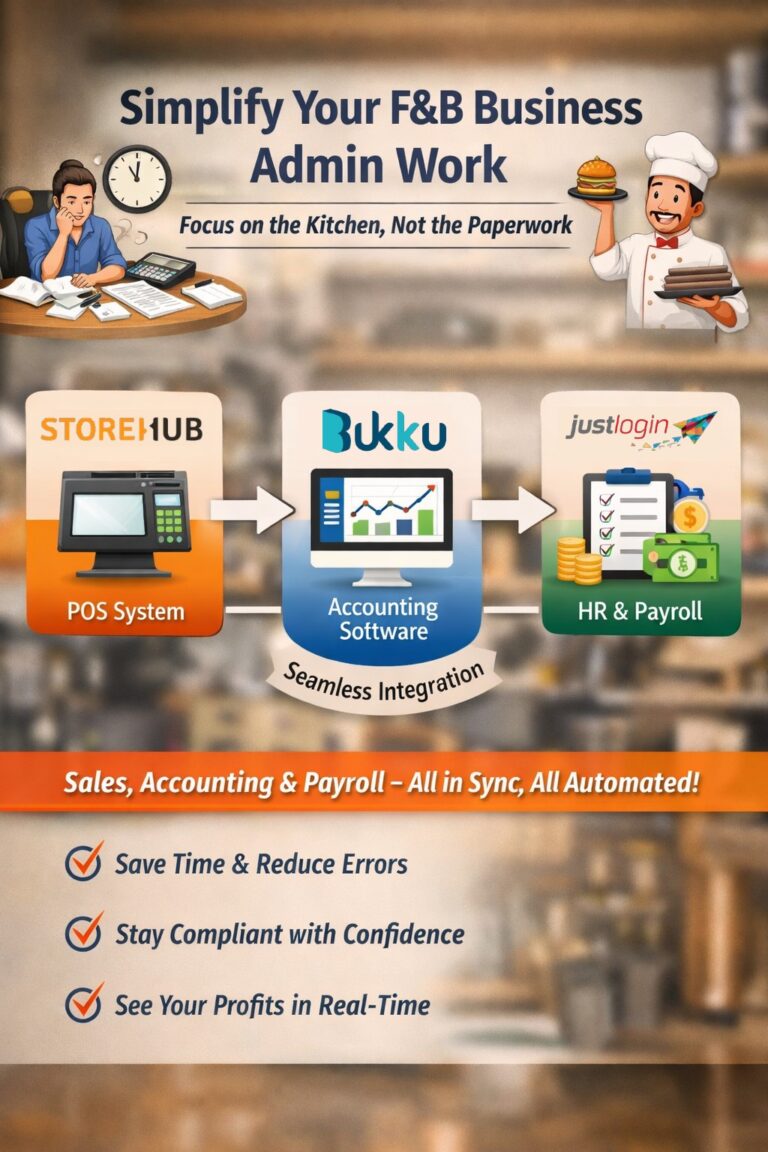
- Point of sales solution
- e‑Invoice platforms – avoid manual submissions
A unified system improves accuracy, traceability, and efficiency.
4. Conduct Internal Reviews
Don’t wait for LHDN to identify issues. Periodically perform internal audits to:
- Check for mismatches
- Validate compliance with e‑Invoice rules
- Improve internal controls
5. Train Your Team
Ensure that finance, accounting, and operations teams understand:
- e‑Invoice requirements
- Proper data entry practices
- Compliance responsibilities
Human errors remain one of the biggest compliance risks.
Final Thoughts
LHDN’s e‑Invoice compliance review framework represents a clear shift toward data transparency and enforcement precision. With reviews based on risk analysis, coverage of multiple financial data points, and a long prosecution window of up to 12 years, businesses must take a more disciplined and proactive approach to compliance.
The key takeaway?
Accuracy, consistency, and timely reconciliation are no longer optional—they are essential.
By strengthening internal processes today, businesses can not only stay compliant but also build a more resilient and audit-ready financial foundation for the future.