What Are SOPs, Why They Matter, and How to Apply Them to Accounting & Payroll
Running a business involves dozens of repeatable tasks, processing invoices, paying salaries, filing taxes, and closing monthly accounts.
Yet many businesses rely on “the way Nurul does it” rather than documented processes.
When Nurul resigns or goes on leave, operations slow down, errors creep in, and knowledge disappears.
This is where Standard Operating Procedures (SOPs) come in.
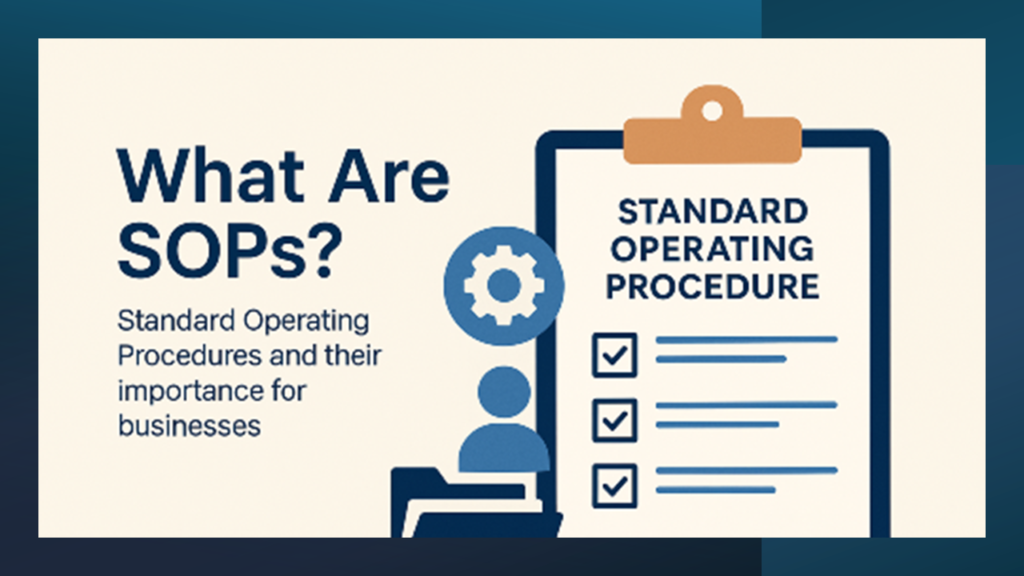
What Are SOPs?
Standard Operating Procedures (SOPs) are written, step‑by‑step instructions that explain how a task is performed, who is responsible, what tools are used, and what standards must be met.
In simple terms:
SOPs document how work should be done, consistently, correctly, and compliantly.
A good SOP typically includes:
- Purpose of the process
- Scope (what it covers and does not cover)
- Roles and responsibilities
- Step‑by‑step actions
- Supporting documents, templates, or systems
- Review and approval details
Why SOPs Are Important for Businesses
1. Consistency and Accuracy
Without SOPs, the same task may be done differently by different employees.
This inconsistency leads to:
- Data errors
- Missed deadlines
- Incorrect financial reporting
SOPs ensure tasks are done the same way every time, regardless of who performs them.
2. Risk Reduction and Compliance
Accounting and payroll errors are not just operational issues, they can lead to:
- Tax penalties
- Audit findings
- Employee disputes
- Compliance breaches
SOPs clearly define checks, approvals, and control points, reducing the risk of costly mistakes.
3. Faster Onboarding and Training
New hires often struggle because knowledge exists only in someone’s head or scattered across emails and chats.
With SOPs:
- Training time is reduced
- New staff become productive faster
- Managers spend less time explaining basics
4. Business Continuity During Staff Turnover
One of the most critical benefits of SOPs is ensuring smooth handover when employees leave.
When there are no SOPs, staff turnover can result in:
- Lost institutional knowledge
- Disrupted payroll runs
- Missing reconciliations
- Delays in reporting and compliance
When SOPs exist:
- Tasks can be reassigned immediately
- Temporary or replacement staff can step in
- Operations continue with minimal disruption
SOPs turn individual knowledge into organisational knowledge.
Applying SOPs to Accounting Processes
Accounting processes are highly structured and ideal for SOP implementation.
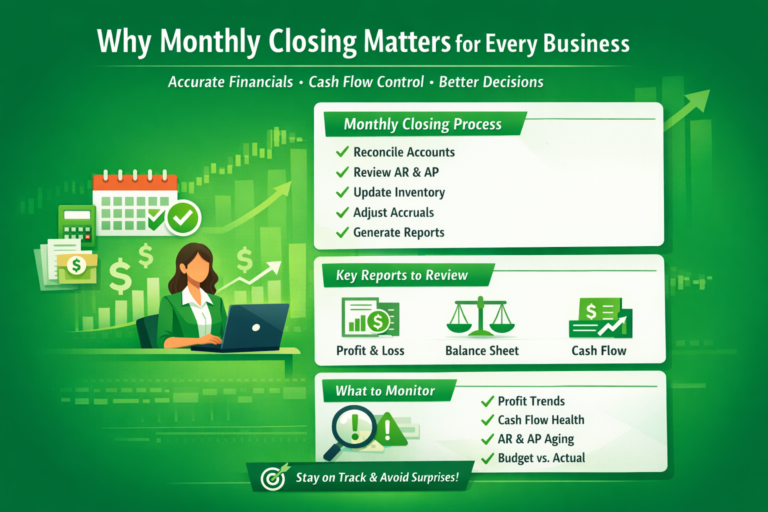
Example 1: SOP for Monthly Accounts Closing
Purpose: Ensure accounts are closed accurately and on time each month.
Key Steps:
- Review all sales invoices and ensure they are posted
- Record supplier invoices and accruals
- Reconcile bank accounts
- Review outstanding receivables and payables
- Perform journal adjustments
- Review profit & loss and balance sheet
- Obtain management approval
Roles Defined:
- Accounts Executive: Data entry and reconciliations
- Finance Manager: Review and approval
Outcome:
Even if the usual accounts executive resigns, another staff member, or an external accountant, can follow the SOP and complete the month‑end close.
Example 2: SOP for Vendor Payments
Purpose: Ensure supplier payments are accurate, authorised, and timely.
Key Steps:
- Match supplier invoice to purchase order and delivery note
- Verify invoice details and GST/SST treatment
- Obtain approval based on approval matrix
- Prepare payment batch in accounting system
- Review payment summary
- Execute payment
- File proof of payment
Control Points:
- Segregation of duties
- Approval thresholds
- System access controls
Outcome:
Reduces fraud risk and prevents duplicate or unauthorised payments.
Applying SOPs to Payroll Processes
Payroll errors directly affect employee trust and morale, making SOPs essential.
Example 3: SOP for Monthly Payroll Processing
Purpose: Ensure employees are paid accurately and on time.
Key Steps:
- Collect attendance, overtime, and leave data
- Verify changes (new hires, resignations, salary changes)
- Calculate gross pay, deductions, and net pay
- Review payroll summary
- Obtain management approval
- Submit salary payments
- Generate payslips
- Submit statutory contributions (e.g., tax, social security)
Documents Referenced:
- Employment contracts
- Payroll checklist
- Statutory rates table
Outcome:
Payroll can continue smoothly even if the payroll officer is on leave or exits suddenly.
Example 4: SOP for Employee Handover During Exit
Purpose: Ensure seamless transition when payroll or finance staff resign.
Key Steps:
- Document current payroll schedule and deadlines
- List system access and passwords (secured)
- Handover outstanding issues and reconciliations
- Review SOPs with replacement staff
- Manager sign‑off on handover completion
Outcome:
No last‑minute scrambling, missed salary payments, or statutory filing issues.
How to Start Implementing SOPs in Your Business
- Identify critical processes
Focus first on accounting, payroll, compliance, and cash flow. - Document what is done today
Do not over‑engineer. Capture actual practices, then improve. - Use simple language
SOPs should be usable by someone who has never done the task before. - Assign process owners
Each SOP should have an owner responsible for keeping it updated. - Review regularly
SOPs must evolve as systems, laws, and business needs change.
Final Thoughts
SOPs are not bureaucracy—they are business insurance.
They protect your business from:
- Staff turnover
- Compliance risks
- Operational disruption
- Knowledge loss
For accounting and payroll, SOPs ensure accuracy, continuity, and peace of mind, allowing business owners to focus on growth rather than firefighting.
If your business depends on “that one person who knows everything,” it’s time to start documenting.
Staff turnover should not put your accounting or payroll at risk.
Adventus works with businesses to document, standardise, and future‑proof critical finance processes.