Accounting Software for Shopee and Lazada Sellers in Malaysia
Selling on Shopee and Lazada platforms has opened up huge opportunities for Malaysian SMEs. From home-based businesses to fast-growing online brands, Shopee and Lazada make it easy to reach customers nationwide.
But while sales are growing, many sellers are still struggling with one critical area: accounting.
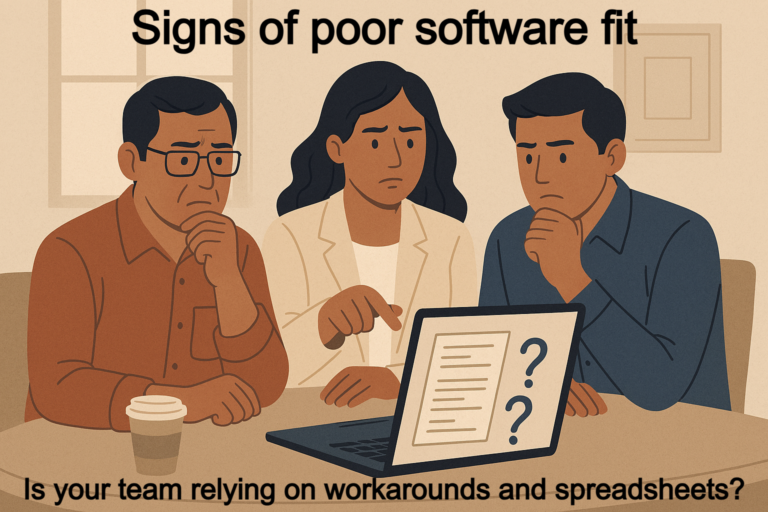
If you’re still relying on spreadsheets or manual bookkeeping, you’re not alone, but you are putting your business at risk.
The Problem: e-Commerce Sales vs Accounting Reality
Both Shopee and Lazada provide detailed reports, but they’re not designed for accounting.
Sellers often face challenges like:
- Multiple transactions per order (sales, fees, refunds, shipping)
- Complex fee structures (commissions, payment processing, ads)
- Delayed payouts that don’t match daily sales
- Difficulty reconciling these reports with bank statements
This leads to:
- Inaccurate profit calculations
- Missing or duplicated entries
- Time-consuming month-end closing
- Poor visibility of business performance
Why Use Accounting Software That Connects to Shopee or Lazada?
This is where integrated accounting software like Bukku becomes essential.
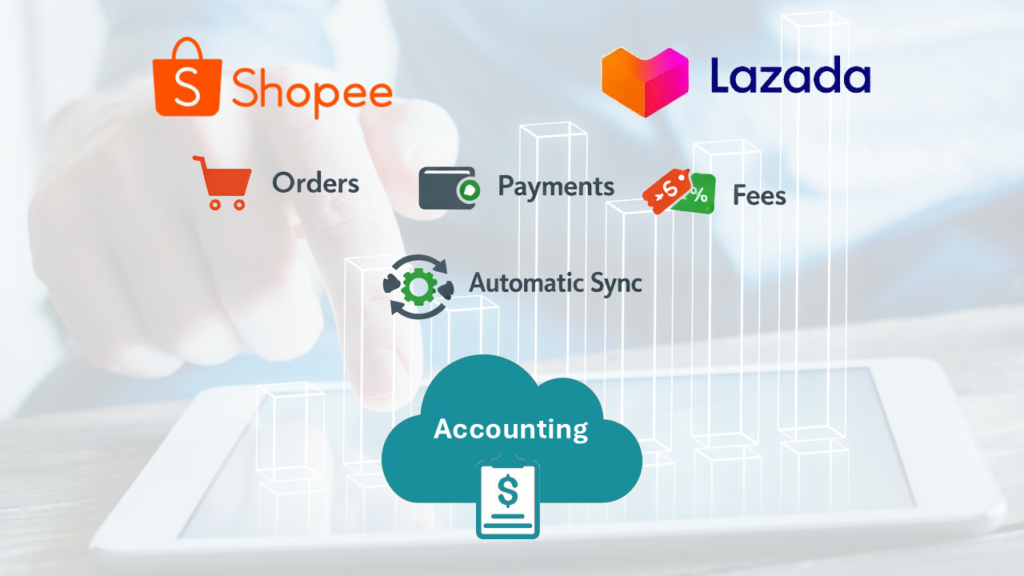
Instead of manually entering data, Bukku can connect directly to Shopee and Lazada, automating your accounting processes.
1. Automatic Sales Synchronisation
Every transaction, including sales, refunds, and payouts, is automatically recorded.
No more manual entry. No more missed transactions.
2. Accurate Fee & Cost Breakdown
e-Commerce platforms charge various fees:
- Commission fees
- Transaction fees
- Shipping subsidies
- Advertising costs
Bukku helps categorise and record these correctly, so you know your true margins.
3. Real-Time Profit Visibility
Are you actually making money on your best-selling products?
With proper integration, you can:
- Track profitability per product
- Identify loss-making items
- Make better pricing decisions
4. Easier Bank Reconciliation
One of the biggest headaches for Shopee and Lazada sellers is matching payouts to bank deposits.
With integrated accounting:
- Payouts are recorded correctly
- Bank reconciliation becomes faster and more accurate
5. Faster Month-End Closing
Instead of spending days cleaning up your accounts:
- Transactions are already recorded
- Reports are up-to-date
- Financial statements can be generated instantly
6. Better Tax Compliance & e-Invoicing Readiness
With Malaysia having implemented mandatory e-Invoicing, proper records are no longer optional.
Using software like Bukku helps ensure:
- Clean audit trails
- Proper documentation
- Readiness for LHDN requirements
Inventory Tracking for e-Commerce Sellers: The Missing Piece
While sales and payments often get the most attention, inventory tracking is just as critical, and often overlooked by e-Commerce sellers.
If your inventory isn’t properly managed, your accounting will never be fully accurate.
Common Inventory Challenges for e-Commerce Sellers
Many sellers face issues like:
- Selling products without knowing actual stock levels
- Bulk purchases with no proper tracking of usage
- Difficulty linking cost of goods sold (COGS) to each sale
- Mismatch between inventory value and reported profits
This leads to a major problem:
Your profits may look good on paper, but be completely wrong in reality.
Why Inventory Must Be Connected to Your Accounting
When inventory is integrated with an accounting software like Bukku:
- Accurate Cost of Goods Sold (COGS)
Each sale reflects the true cost of the product sold—not just the selling price. - Real Profit Calculation
You can see actual margins after deducting product costs, platform fees, and other expenses. - Stock Level Visibility
Avoid overselling or running out of fast-moving items. - Better Purchasing Decisions
Know which products to restock—and which ones to stop selling.
How Inventory Works in an Integrated Setup
With proper integration between Shopee or Lazada and your accounting system:
- A customer places an order on Shopee or Lazada
- The sale is recorded automatically in Bukku
- Inventory is reduced based on the product sold
- Cost of goods sold is recognised instantly
- Profit is updated in real time
This creates a complete financial picture, not just sales data.
Simple vs Advanced Inventory: What Do You Need?
Not every e-Commerce seller needs complex inventory systems.
Simple setup (suitable for most SMEs):
- Track stock quantity
- Assign cost per item
- Basic COGS calculation
More advanced setup (for scaling businesses):
- Batch or FIFO tracking
- Multi-channel inventory (Shopee, Lazada, retail)
- Integration with warehouse systems
Why Bukku is a Strong Choice for Malaysian e-Commerce Sellers
Bukku is designed specifically for Malaysian SMEs.
Key advantages include:
- Local compliance (SST, e-Invoicing readiness)
- User-friendly interface for non-accountants
- Integration with Malaysian banks and platforms
- Affordable pricing for small businesses
For e-Commerce sellers, this means less time on admin and more time growing your business.
When Should You Start Using Accounting Software?
If you’re experiencing any of the following, it’s time to upgrade:
- You’re manually keying in transactions
- Your profits don’t match your bank balance
- Month-end closing takes too long
- You’re unsure about your tax position
Final Thoughts
Shopee and Lazada help you grow your sales, but without proper accounting, growth can quickly turn into confusion.
Using integrated accounting software like Bukku gives you:
- Accurate numbers
- Time savings
- Better decision-making
- Compliance peace of mind
In today’s competitive e-commerce landscape, having real-time financial clarity is no longer optional, it’s a necessity.
A Cautionary Tale: The Importance of Proper Accounting
The implementation of e-invoicing in Malaysia has indeed acted as a powerful digital net for LHDN.
According to reports from Bernama and The Star on March 4, 2025, LHDN identified approximately 66,000 e-Commerce merchants who were previously “invisible” to the tax system.
Through the mandatory submission of e-invoices by e-commerce platforms (which began on August 1, 2024), LHDN received data on millions of transactions. By cross-referencing this data with their existing database, they discovered:
- 4 Million e-Invoices: These 66,000 merchants had collectively issued millions of invoices through digital platforms.
- Zero Tax Records: Despite this high volume of business activity, LHDN found no record of these merchants submitting Income Tax Returns.
This report serves as a stark warning to all business owners, especially those in the digital and retail space. Here is why proper accounting is now a matter of survival, not just “paperwork”:
- Transparency is No Longer Optional
In the past, many small traders operated on a “cash-and-carry” basis or relied on the fact that LHDN couldn’t track every online sale. e-invoicing changes the game by creating a digital footprint for every transaction. If your platform issues an invoice, LHDN already knows your revenue before you even file your taxes. - The Danger of “Sudden” Tax Liability
Without proper accounting records, these 66,000 merchants likely have no way to prove their business expenses (e.g., stock purchases, shipping costs, marketing). If LHDN audits them, they may be taxed on their gross revenue rather than their net profit, leading to a massive tax bill that could bankrupt the business. - Audit Preparedness
LHDN has warned that they are actively monitoring data through the MyInvois system. Merchants without a systematic way to track their invoices and receipts will find it impossible to defend themselves during an audit. Proper accounting allows you to reconcile what the system says you sold with what you actually earned after costs. - Avoiding Severe Penalties
Under the Income Tax Act 1967, failure to declare income or keep proper records can lead to heavy fines, travel bans, or legal action. The 66,000 identified merchants are now under the microscope; for others, the “grace period” for voluntary disclosure is the only window left to get their books in order before enforcement begins.
The takeaway for merchants is clear
The era of “flying under the radar” is over. Transitioning to digital accounting software that integrates with the MyInvois portal is the only way to ensure your business remains compliant and sustainable in this new transparent era.
Need Help Setting This Up?
At Adventus Business Consult, we help Malaysian SMEs:
- Implement cloud accounting solutions
- Integrate Shopee or Lazada with accounting systems
- Ensure compliance with tax and e-Invoicing requirements
Contact us today to get your accounting system working for your business, not against it.