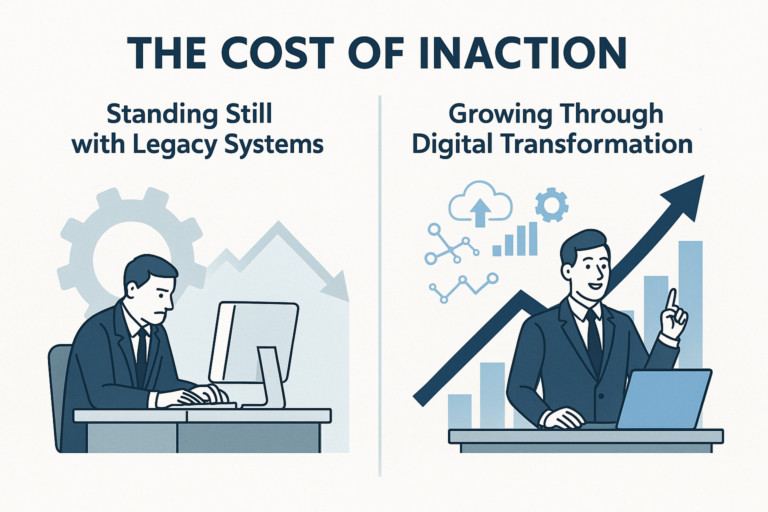
Technical Debt Explained: Why Old Software Slows Businesses
Technical debt is a term often used in technology discussions, but its impact goes well beyond IT teams.
In finance and accounting systems, especially, technical debt can quietly undermine efficiency, increase risk, and make change increasingly difficult.
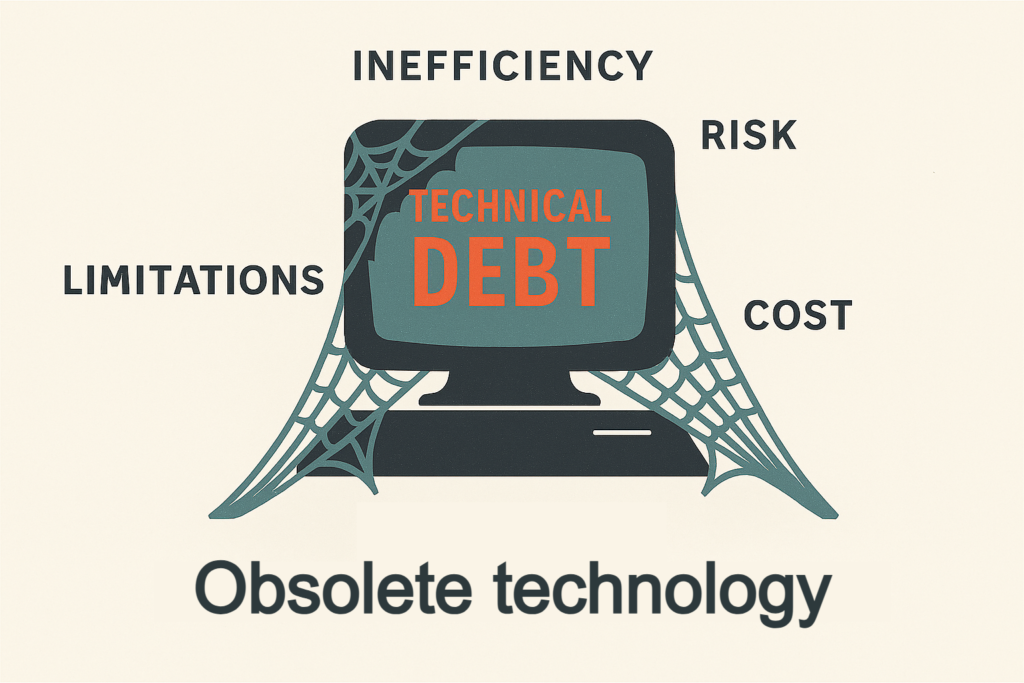
This article explains technical debt in simple terms, and why it’s so relevant when evaluating long‑standing accounting platforms.
What Is Technical Debt?
Technical debt is what accumulates when software is extended through shortcuts and patches instead of being properly redesigned.
Think of it like maintaining an old building:
- Instead of fixing the foundations, you reinforce weak areas
- Instead of replacing outdated wiring, you add adapters
- Instead of restructuring, you work around limitations
The building still works, but every change becomes harder, slower, and riskier.
That’s technical debt.
How Accounting Systems Accumulate Technical Debt
Many established accounting platforms were originally well‑built, for their time. But over years or decades, new requirements are layered onto an old core:
- Regulatory changes
- New reporting formats
- Integrations with other systems
- Automation and analytics expectations
Each addition solves a short‑term problem, but over time the system becomes:
- Complex and fragile
- Hard to modify safely
- Dependent on specialised knowledge
- Increasingly resistant to change
The result is a platform that still operates, but no longer evolves easily.
Why Technical Debt Is a Business Problem, Not a Technical One
Although technical debt sounds like an IT issue, its effects are felt daily by the business.
As technical debt grows, organisations often experience:
- Slower reporting cycles
- Increased manual intervention
- Higher costs for enhancements
- Delays in responding to regulatory or business changes
Eventually, innovation slows, not because teams don’t have ideas, but because the system can’t support them.
The Visibility Problem
One of the most dangerous aspects of technical debt is that it’s largely invisible.
The system may:
- Be widely used
- Appear stable
- Carry a well‑known brand
Yet behind the scenes, progress stalls because every improvement takes longer, costs more, and carries more risk.
Why This Matters When Choosing Accounting Software
When evaluating accounting solutions, it’s easy to focus on:
- Pricing
- Features
- Familiar names
But if a platform’s core technology is outdated, those advantages diminish over time.
Understanding technical debt helps explain:
- Why some systems struggle to automate
- Why integrations feel clunky
- Why upgrades are disruptive
- Why “modern features” sometimes feel limited
Choosing Technology That Moves Forward
Modern platforms designed with today’s technologies tend to accumulate far less technical debt because they are built to:
- Evolve continuously
- Automate by design
- Integrate easily
- Scale without re‑engineering
This doesn’t eliminate challenges—but it significantly reduces friction as businesses grow and change.
Related Reading
To see how technical debt affects real‑world purchasing decisions, read our main article:
Choosing an Accounting Solution:
Why Familiar Platforms Aren’t Always the Right Choice