What are signs of poor software fit?
As a small business owner in Malaysia, choosing the right software can feel like a big win, until months later, when daily operations feel harder instead of easier.
Many SMEs invest in accounting systems, HR platforms, CRM tools, or POS software with good intentions, only to discover that the software doesn’t truly “fit” the business.
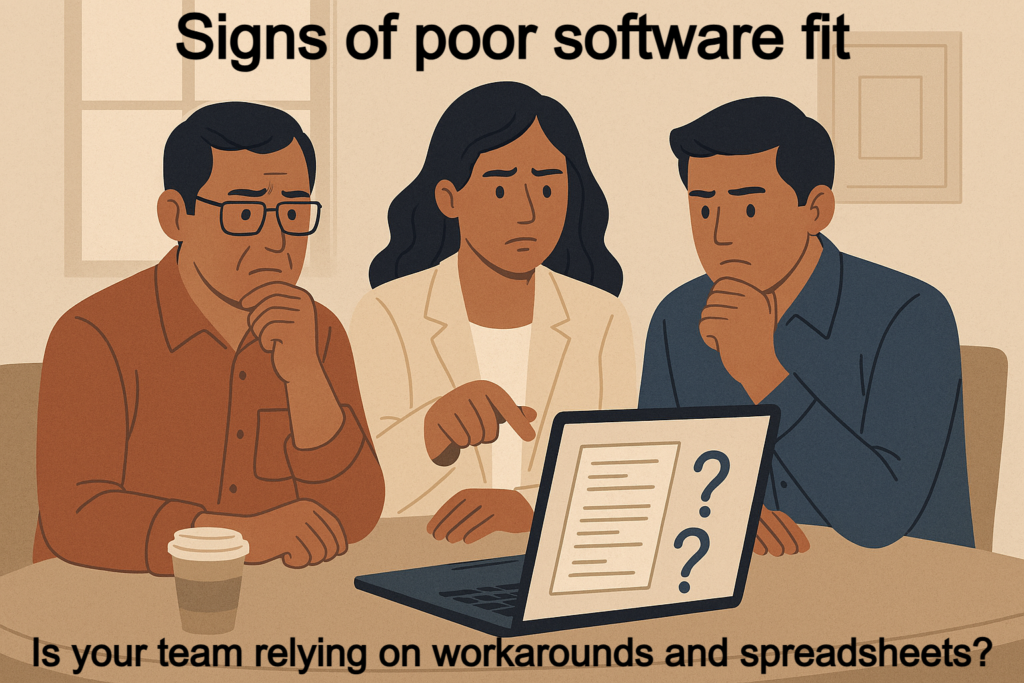
Poor software fit doesn’t always fail loudly. More often than not, it quietly drains productivity, increases errors, and frustrates your team.
If you’re unsure whether your current system is helping or hurting your business, here are key warning signs to watch for.
1. Your Team Relies on Workarounds and Spreadsheets
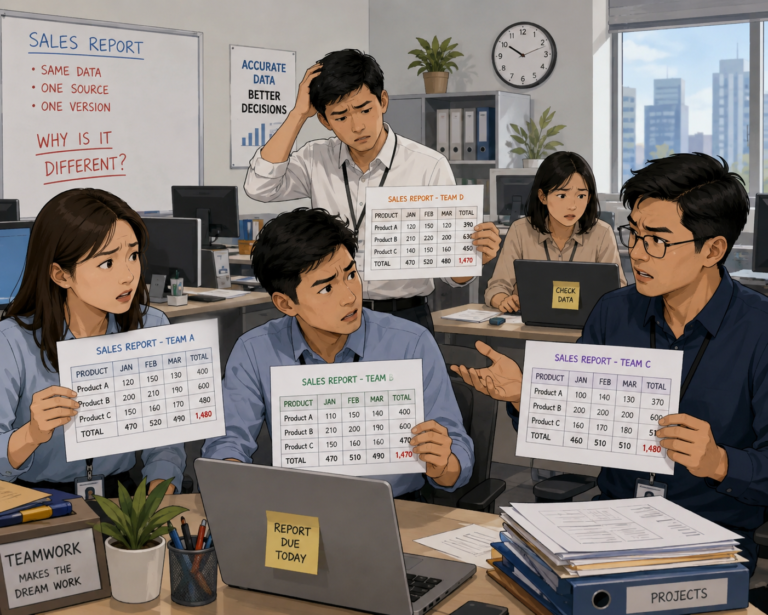
If your staff frequently exports data from the system to Excel or Google Sheets “just to get things done,” that’s a red flag.
Examples include:
- Manually recalculating sales or commissions
- Tracking leave, claims, or stock outside the system
- Maintaining parallel records “in case the system data is wrong”
Software should reduce manual work, not push it elsewhere. When workarounds become standard practice, it usually means the system doesn’t align with how your business actually operates.
2. Processes Are Dictated by the Software (Not the Business)
Good software supports your workflow. Poor-fit software forces your team to change sensible processes just to suit system limitations.
Common symptoms:
- Staff performing steps “because the system needs it,” not because it makes business sense
- Sales, finance, or operations teams slowing down to accommodate rigid workflows
- Delays at month-end or payroll cut-off due to system constraints
For Malaysian SMEs, this often shows up in accounting or payroll systems that don’t align with local practices such as SST treatment, statutory deductions, or flexible allowance structures.
3. Reports Don’t Answer Management’s Real Questions
If you regularly hear:
- “The system can’t generate that report”
- “We need to manually combine a few reports”
- “The numbers are correct, but not presented in a useful way”
…then the software may not be fit for decision-making.
Owners and managers need clear visibility on:
- Cash flow
- Profit by product, customer, or branch
- Staff costs and productivity
- Sales pipeline and conversions
When reporting feels painful or unreliable, decisions become slower, or worse, based on incomplete data.
4. High Dependence on One “System Expert”
Does everything grind to a halt when one staff member is on leave?
If only one person truly understands:
- How to run payroll correctly
- How to fix errors
- How to generate key reports
…it’s a sign the system is overly complex or poorly designed for your team’s capability level.
For SMEs, software should be usable, not just powerful. Excessive dependency on one individual increases business risk, especially in small teams with natural staff turnover.
5. Frequent Errors, Rework, or Data Inconsistencies
Poor software fit often creates friction points that lead to mistakes, such as:
- Duplicate customer or supplier records
- Mismatched figures between modules
- Incorrect tax, payroll, or inventory calculations
- Regular rechecking “just to be safe”
Over time, your team may stop trusting the system and rely on manual verification, negating the very reason the software was implemented.
6. Low User Adoption Despite Training
If your team avoids using certain features, or the system entirely, take it seriously.
Common signs:
- Only basic features are used, despite paying for more
- Staff delay updates until the last minute
- Complaints that the system is “too complicated” or “not intuitive”
This isn’t always a training problem. Often, it means the software was designed for a different business size, industry, or level of process maturity.
7. Local Compliance Feels Like an Afterthought
For Malaysian businesses, local compliance isn’t optional.
Warning signs include:
- Manual adjustments for SST, PCB, EPF, SOCSO, or EIS
- Difficulty preparing for LHDN or audit requirements
- Lack of readiness for initiatives such as e‑Invoicing
- Support teams unfamiliar with Malaysian regulations or time zones
Software built primarily for other regions may technically “work” but still cost you time, stress, and compliance risk.
8. Customisation Is Expensive, Slow, or Risky
Some level of configuration is normal. But if you find that:
- Small changes require costly consultants
- Custom features break after upgrades
- You’re afraid to update the system at all
…you may be stuck with software that doesn’t scale with your business.
For growing SMEs, flexibility matters. Your operations today will not look the same in two or three years.
9. The Software No Longer Matches Your Business Stage
Many SMEs outgrow software, or choose systems that are too “enterprise-heavy” too early.
Poor fit often happens when:
- A startup tool can’t handle higher transaction volumes
- An enterprise system overwhelms a lean business
- The business has expanded to multiple branches or channels
What fit you two years ago may no longer suit your current reality.
Final Thoughts: Fit Is About Value, Not Features
The best software is not the one with the most features, it’s the one that:
- Supports your actual workflows
- Is easy for your team to adopt
- Produces clear, reliable insights
- Aligns with Malaysian business and compliance needs
If several of the signs above feel familiar, it may be time for a structured review, not necessarily an immediate replacement, but an honest assessment of whether your current system is enabling or limiting your growth.
A good software fit should make your business calmer, not more chaotic.
Not Sure If Your Software Still Fits?
At Adventus, we help small and growing businesses in Malaysia assess whether their current systems truly support their operations, compliance needs, and growth plans.
Our approach is practical and business‑first, not driven by vendor or one‑size‑fits‑all solutions.
If you suspect your software is creating friction instead of value, let’s start with a conversation. A short, structured review can often uncover quick wins—without immediately replacing your system.
Talk to Adventus about a software fit assessment.