Bookkeeping Tips for Malaysian SMEs: Stay Audit-Ready
Maintaining accurate financial records is more than just a regulatory requirement in Malaysia, it’s a key factor in the growth and sustainability of your business.
For small and medium-sized enterprises (SMEs), staying audit-ready can save time, reduce stress, and help avoid fines from authorities like the Inland Revenue Board (LHDN).
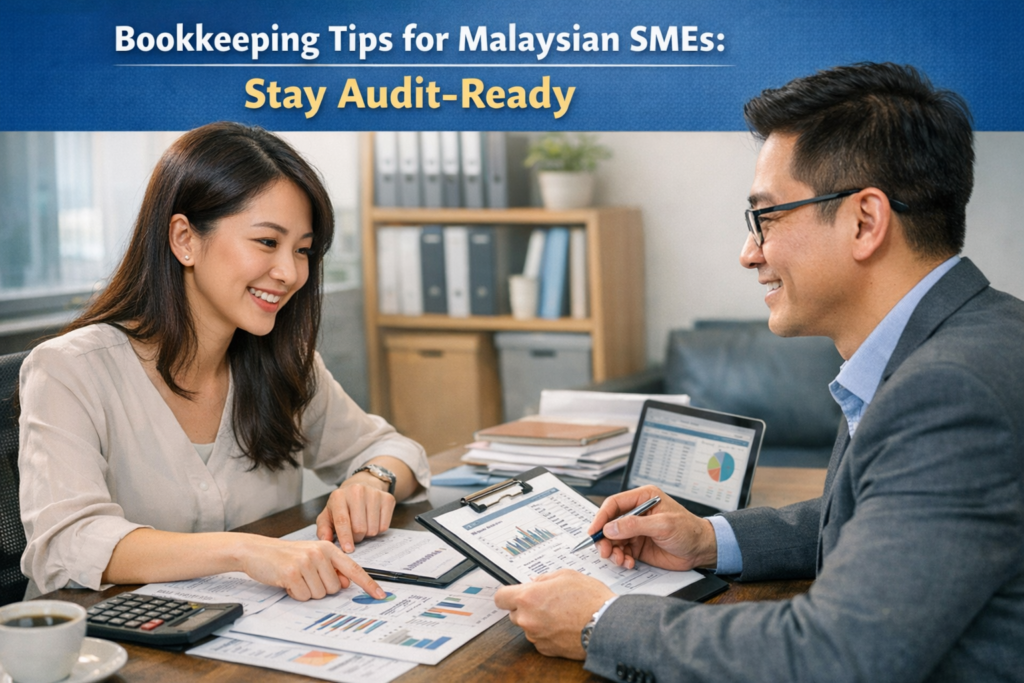
Here are practical bookkeeping tips to help your SME stay organized and compliant:
1. Keep Business and Personal Finances Separate
Mixing personal and business expenses is a common mistake that complicates bookkeeping. Open a dedicated business bank account and ensure all business transactions flow through it. This simple step makes reconciliation easier and strengthens your financial credibility.
2. Record Transactions Promptly
Don’t let receipts and invoices pile up. Record every transaction as soon as it occurs, whether it’s sales, purchases, or petty cash expenses. Prompt recording ensures accuracy and reduces the risk of missing or incorrect entries.
3. Organize Receipts and Invoices
Maintain both digital and physical copies of all receipts, invoices, and supporting documents. Use folders or cloud storage categorized by month or transaction type. This system is invaluable during audits and helps you track expenses efficiently.
4. Reconcile Accounts Regularly
Monthly bank reconciliations help you spot discrepancies early. Compare your bank statements against your books to ensure every transaction is accounted for. Regular reconciliation prevents errors from snowballing and ensures you always have an accurate view of your cash flow.
5. Use Accounting Software
Modern accounting software, like Xero or QuickBooks, simplifies bookkeeping and helps you stay audit-ready. Automated features reduce human errors, generate financial reports instantly, and even support tax filing requirements.
6. Understand Malaysian Tax Obligations
Be aware of deadlines for income tax, GST/VAT (if applicable), and e-invoicing compliance. Accurate bookkeeping ensures your financial records are always ready for submission to LHDN, reducing the risk of penalties.
7. Maintain a Clear Audit Trail
Ensure every transaction can be traced back to its source document. Keep journals, ledgers, and supporting documentation organized. A clear audit trail not only satisfies regulatory requirements but also helps you make informed business decisions.
8. Review Your Books Periodically
Regularly reviewing financial statements helps you identify trends, control costs, and plan for growth. Schedule quarterly or monthly reviews to stay proactive rather than reactive.
Conclusion
Staying audit-ready isn’t just about compliance, it’s about running a more organized, transparent, and efficient business. By implementing these bookkeeping tips, Malaysian SMEs can reduce stress during audits, make informed decisions, and focus on growing their business with confidence.
Need help keeping your books audit-ready?
Adventus Business Consult offers professional bookkeeping and payroll services tailored for Malaysian SMEs, helping you stay compliant and stress-free.