In-House vs Outsourced Payroll in Malaysia for SMEs
Payroll is one of the most important, and sensitive, functions in any business.
Employees expect to be paid accurately and on time, while employers must comply with multiple statutory requirements in Malaysia.
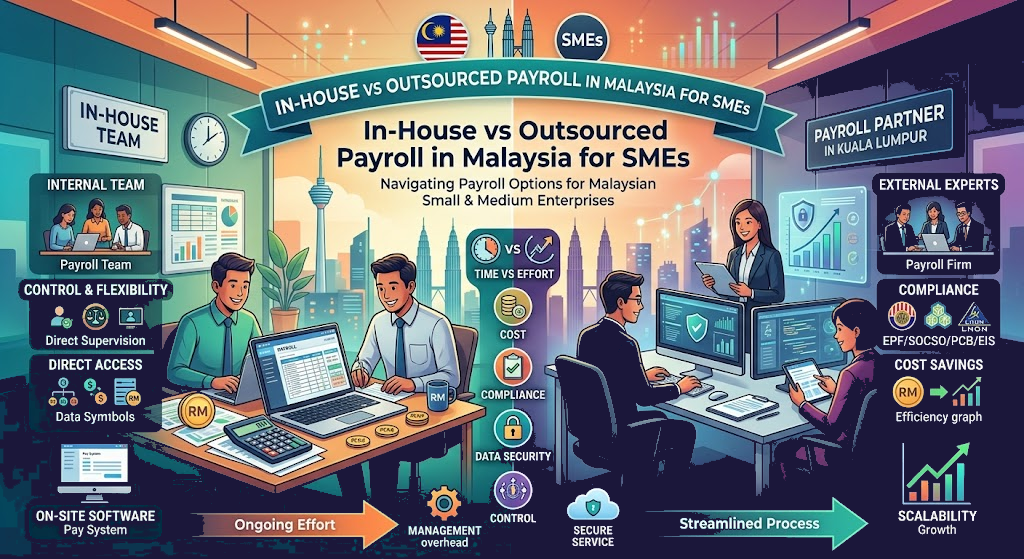
For many small and medium-sized enterprises (SMEs), the question often arises: Should payroll be handled internally, or outsourced to a specialist payroll provider?
Understanding the differences between in-house payroll and outsourced payroll can help business owners decide which option is more efficient, cost-effective, and compliant.
Understanding Payroll Responsibilities in Malaysia
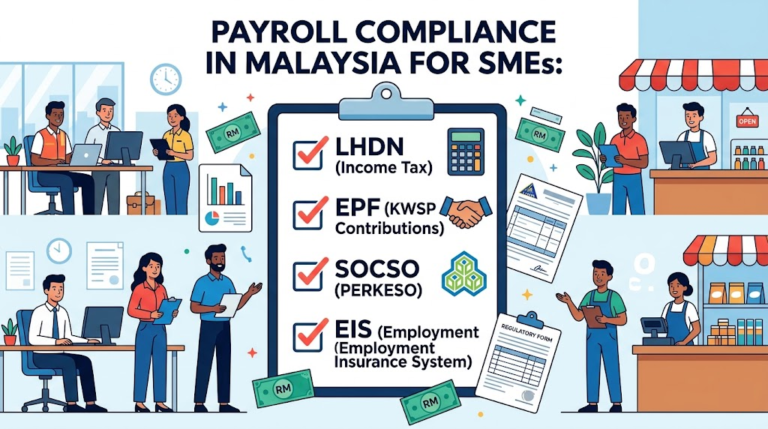
Payroll in Malaysia is more than just calculating salaries. Businesses must also comply with statutory contributions and tax regulations governed by several agencies, including:
- Employees Provident Fund (EPF)
- Social Security Organisation (SOCSO / PERKESO)
- Inland Revenue Board of Malaysia (LHDN)
- Human Resources Development Corporation (HRD Corp)
These requirements involve monthly submissions, statutory deductions, reporting, and strict deadlines. Even small errors can lead to penalties or compliance issues.
Option 1: In-House Payroll
Many SMEs start by managing payroll internally, often assigning the task to an administrative or finance employee.
Advantages of In-House Payroll
- Direct Control
Business owners have full visibility and control over payroll processes. - Immediate Access to Data
Employee payroll records and reports are available internally at any time. - Familiarity with Employees
Internal staff may better understand employee arrangements such as allowances, overtime, or leave adjustments.
Challenges of In-House Payroll
- Compliance Risks
Malaysia’s payroll regulations change periodically. Keeping up with updates to statutory rates, tax rules, and reporting requirements can be challenging. - Staff Dependency
If the person responsible for payroll resigns or is absent, payroll processing may be disrupted. - Time-Consuming Administrative Work
Payroll processing involves calculations, reconciliations, statutory submissions, and report preparation, tasks that take valuable time away from running the business. - Hidden Costs
Beyond salaries, in-house payroll requires software, training, and ongoing compliance updates.
Option 2: Outsourced Payroll
Outsourced payroll means engaging a specialist firm to manage payroll processing and statutory compliance on behalf of the company.
Advantages of Outsourcing Payroll
- Compliance Expertise
Professional payroll providers stay updated with regulatory changes involving EPF, SOCSO, and income tax. - Reduced Administrative Burden
Business owners and internal staff can focus on core business operations instead of payroll administration. - Continuity and Reliability
Outsourcing reduces dependency on a single employee managing payroll internally. - Accuracy and Timeliness
Experienced payroll providers use established processes and systems designed to reduce errors. - Cost Efficiency
For many SMEs, outsourcing payroll can cost less than hiring and training dedicated payroll staff.
Potential Concerns with Outsourced Payroll
- Less Immediate Control
Some businesses worry about losing control over payroll data. - Data Confidentiality
Companies must ensure they work with trusted providers that adhere to strict confidentiality standards.
However, reputable payroll providers implement secure processes to protect sensitive payroll information.
Which Option Is Better for SMEs?
For larger companies with dedicated HR and finance departments, managing payroll internally may work well.
However, many SMEs in Malaysia find that outsourcing payroll provides significant advantages, including:
- Lower administrative workload
- Reduced compliance risk
- Professional payroll expertise
- Predictable costs
Outsourcing allows business owners to focus on growing their business instead of managing regulatory requirements.
How Adventus Business Consult Helps SMEs
At Adventus Business Consult, we provide reliable outsourced payroll services designed specifically for Malaysian SMEs.
Our experienced consultants handle:
- Monthly payroll processing
- Statutory deductions and submissions
- Payroll reporting
- Compliance with Malaysian regulations
With over 30 years of experience in accounting and payroll, our team ensures your employees are paid accurately and your business remains compliant.
Simplify Your Payroll Today
Managing payroll doesn’t have to be complicated or time-consuming.
If your business is looking for a reliable and compliant payroll solution, outsourcing payroll could be the smarter choice.
Contact Adventus Business Consult today to learn how our payroll services can help streamline your payroll processes and keep your business compliant.
Need Help With Payroll Compliance?
Managing payroll, statutory deductions, and employee records can be time-consuming for SMEs. With the right support, you can ensure payroll accuracy and stay compliant with Malaysian regulations.
At Adventus Business Consult, we help SMEs simplify payroll through reliable outsourced payroll services.
✔ Accurate monthly payroll processing
✔ EPF, SOCSO, EIS and PCB submissions
✔ Payslips and payroll reports
✔ Support from experienced payroll specialists
👉 Speak to us today to see how outsourcing payroll can save your business time and reduce compliance risks.