Understanding Pre-Incorporation Expenses for Malaysian SMEs
Starting a business involves many costs before a company begins operations. Founders may spend money on company registration, professional advice, software setup, branding, and other activities needed to prepare the business.

These costs are commonly referred to as pre-incorporation expenses.
For Malaysian SMEs, it is important to understand that there are two separate considerations:
- Accounting treatment – How should the expense be recorded in the company’s financial statements?
- Tax treatment – Can the expense be claimed as a tax deduction?
A cost may be recorded in the accounts but not necessarily be deductible for tax purposes.
What Are Pre-Incorporation Expenses?
Pre-incorporation expenses are costs incurred before a company is legally incorporated.
Before incorporation, the business does not yet exist as a separate legal entity. Therefore, these expenses are usually paid by the founders, directors, or shareholders personally.
After incorporation, the company may reimburse these costs if they were incurred for the purpose of setting up the business.
Examples of pre-incorporation expenses include:
- Company registration related costs
- Company secretary fees
- Legal fees for incorporation documents
- Accounting and tax advisory fees
- Business planning costs
- Market research
- Website development
- Initial software setup
- Branding and promotional materials
- Business licence applications
Examples of Pre-Incorporation Expenses in a Malaysian SME
1. Incorporation Expenses
When setting up a private limited company (Sdn Bhd), founders may incur costs such as:
- Registration fees
- Company secretary charges
- Preparation of incorporation documents
- Drafting of the company constitution (if applicable)
Example:
A founder pays RM1,500 to a company secretary to incorporate a new Sdn. Bhd.
This is an incorporation expense because the cost was incurred before the company legally existed.
2. Professional Advisory Fees
Many entrepreneurs seek professional advice before launching.
Examples:
- Accountant advising on accounting systems
- Tax adviser assisting with business structure
- Lawyer preparing shareholder agreements
Example:
A founder pays RM3,000 for professional advice before commencing operations.
The accounting treatment depends on the nature of the service provided.
3. Initial Setup Costs
A business may spend money preparing systems before starting.
Examples:
- Accounting software setup
- Payroll system configuration
- Website development
- Office setup
Example:
A company subscribes to an accounting system two months before issuing its first invoice.
The treatment depends on whether the cost creates a business asset or is simply an operating expense.
Accounting Treatment of Pre-Incorporation Expenses
From an accounting perspective, the key question is:
Does the expenditure create a future economic benefit, or is it simply a cost of starting the business?
1. Expenses Recorded in Profit or Loss
Many startup costs are treated as expenses because they do not create a separate asset.
Examples:
- Professional consultation fees
- Market research
- Advertising
- Training costs
- General setup costs
Example accounting entry:
Dr Professional Fees / Pre-Operating Expenses
Cr Director / Shareholder Payable
When the company reimburses the founder:
Dr Director / Shareholder Payable
Cr Bank
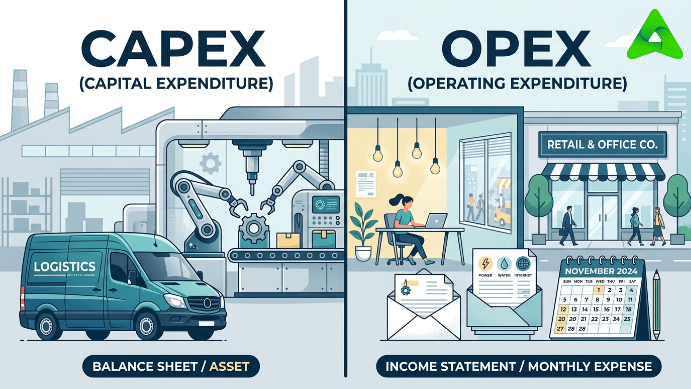
2. Expenses Recorded as Assets
Some costs may qualify as assets if they provide future economic benefits.
Examples:
- Computers and equipment
- Certain software development costs
- Business systems that meet asset recognition requirements
Example:
A founder purchases computers costing RM8,000 before the company starts operations.
Accounting entry:
Dr Computer Equipment RM8,000
Cr Director / Shareholder Payable RM8,000
The asset is then depreciated over its useful life.
Tax Treatment of Incorporation Expenses in Malaysia
One important point for Malaysian SMEs:
Accounting recognition and tax deductibility are not the same.
An expense may appear in the company’s accounts but may not be allowed as a tax deduction.
Generally, incorporation expenses such as:
- Company registration fees
- Preparation of incorporation documents
- Drafting of company constitution
- Certain company formation-related professional fees
are generally not deductible for tax purposes because they are considered capital in nature.
However, there are specific circumstances where qualifying SMEs may claim deductions under the Income Tax (Deduction For Incorporation Expenses) Rules 2003, subject to meeting the required conditions.
SMEs should review whether they qualify before assuming incorporation costs can be claimed.
Example: Accounting vs Tax Treatment
A founder incurs the following costs before incorporating:
Expense | Accounting Treatment | Tax Treatment |
|---|---|---|
Company registration fees | Recorded as expense or incorporation-related cost | Generally non-deductible unless qualifying conditions apply |
Company secretary incorporation fees | Recorded as an expense (professional fees/incorporation expenses) | Generally non-deductible unless qualifying conditions apply |
Accounting system setup | Expense or asset depending on nature | Depends on tax rules and nature of expense |
Computer purchase | Fixed asset | Capital allowance may apply if conditions are met |
Advertising before launch | Expense | May be deductible if incurred for business purposes and conditions are met |
Under Section 33(1) of the Income Tax Act 1967, incorporation and registration costs are considered pre-commencement/capital expenses (not directly incurred in the production of gross income), making them generally non-deductible. However, special tax rules provide specific relief.
Qualifying Conditions: Under the Income Tax (Deduction for Incorporation Expenses) Rules 2003 [P.U. (A) 475/2003], you can claim a full deduction on SSM registration fees and stamp duties only if your company meets the following criteria:
- The company must be incorporated in Malaysia.
- The company must have an authorized capital (or paid-up capital) not exceeding RM2.5 million.
- The deduction must be claimed in the Year of Assessment (YA) in which the company commences its business.
Common Mistakes SMEs Make
Assuming Every Business Setup Cost Is Tax Deductible
A common misconception is:
“If it is recorded as an expense, I can claim it against tax.”
This is not always true.
Tax rules distinguish between revenue expenses and capital expenses.
Capitalising Everything
Some businesses record all startup costs as assets to avoid reducing profit.
This may result in financial statements that do not accurately reflect the business position.
Losing Supporting Documents
Even where a deduction may be available, proper documentation is essential.
Keep:
- Invoices
- Receipts
- Agreements
- Proof of payment
- Explanation of business purpose
Final Thoughts
Pre-incorporation expenses are a normal part of starting a Malaysian SME. The important thing is to understand that when the expense was incurred, what it represents, and how tax rules apply all matter.
Proper classification from the beginning helps businesses:
- Maintain accurate financial records
- Avoid tax issues
- Understand their true startup costs
- Build a stronger foundation for growth