Scaling Your Business Without Growing Your Team
For many small and mid-sized businesses, growth often feels tied to one thing: hiring more people.
More customers? Hire more staff.
More transactions? Expand the team.
More complexity? Add another layer of management.
But in today’s environment, where talent is scarce, costs are rising, and agility matters more than ever, this approach is no longer sustainable.
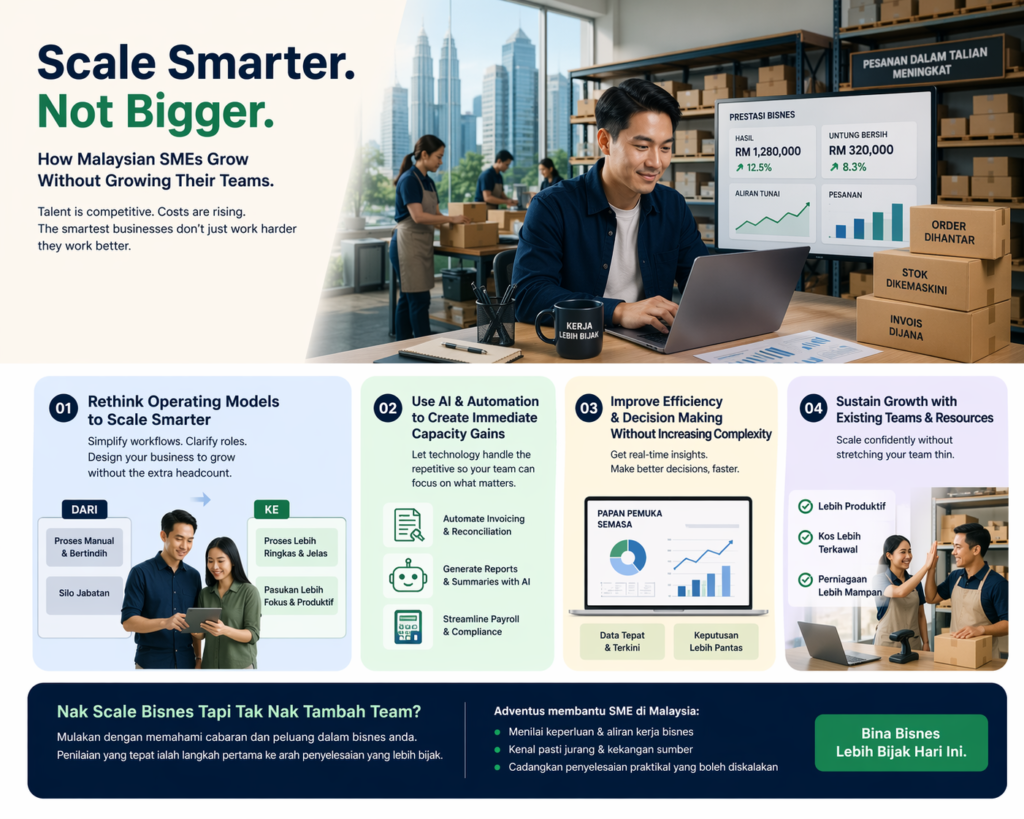
The smarter path forward? Scale impact without scaling headcount.
1. Rethink Your Operating Model
Before adding more people, it’s worth asking a fundamental question:
Is your current way of working designed for growth?
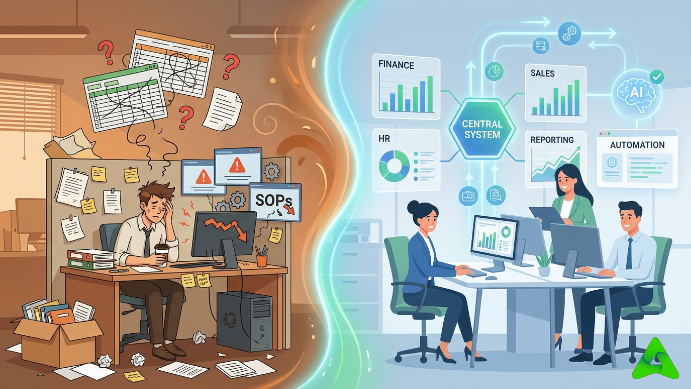
Many SMEs operate with processes built organically over time:
- Manual workflows patched together
- Roles that overlap or are unclear
- Systems that don’t “talk” to each other
Instead of hiring to “fix” these gaps, rethink your operating model:
- Simplify workflows across departments
- Standardise repetitive processes
- Redesign roles around outcomes, not tasks
A well-designed operating model allows your existing team to do more meaningful work, not just more work.
2. Use AI and Automation to Create Immediate Capacity
One of the fastest ways to scale without hiring is by unlocking hidden capacity.
This is where AI and automation come in, not as futuristic tools, but as practical solutions already accessible to SMEs.
Examples include:
- Automating invoice processing and reconciliations
- Using AI tools to generate reports and summaries
- Streamlining payroll and compliance workflows
- Auto-generating management insights from financial data
Instead of spending hours on repetitive tasks, your team can focus on:
- Analysis
- Decision-making
- Customer engagement
The result?
You gain capacity instantly, without adding a single headcount.
3. Improve Efficiency Without Increasing Complexity
A common mistake businesses make is adding new tools or processes that actually make things more complicated.
More systems ≠ more efficiency.
To truly scale impact:
- Integrate systems rather than stacking them
- Focus on visibility (real-time dashboards, clean reporting)
- Reduce duplication of data entry
- Eliminate unnecessary approval layers
Efficiency isn’t about doing more, it’s about removing friction.
When your team spends less time chasing data or fixing errors, productivity naturally increases.
4. Make Better Decisions, Faster
Growth doesn’t just depend on execution, it depends on decision quality and speed.
With the right systems and structure:
- Financial data becomes timely and accurate
- Business performance is visible in real time
- Leaders can act proactively instead of reactively
This is where many SMEs struggle:
- Reports come too late
- Data is inconsistent
- Decisions are based on gut feel instead of insight
By improving how information flows through your business, you enable your existing team to:
- Spot issues earlier
- Respond faster
- Capture opportunities more effectively
5. Sustain Growth with the Team You Already Have
Hiring will always have its place. But sustainable growth comes from maximising what you already have.
When you:
- Redesign your operating model
- Leverage automation and AI
- Simplify processes
- Strengthen decision-making
You create a business that can grow without constantly increasing overhead.
This doesn’t just improve profitability, it also:
- Reduces pressure on your team
- Improves consistency
- Builds resilience
Final Thoughts
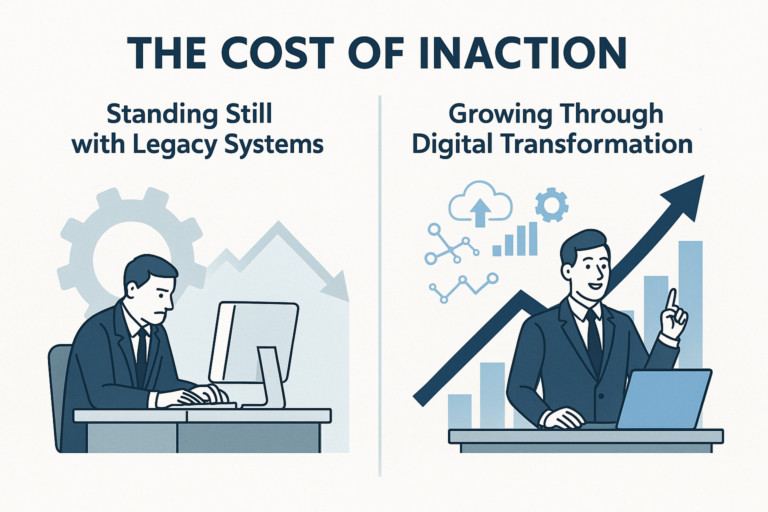
Scaling isn’t about doing more with less. It’s about doing better with what you already have.
For SMEs in Malaysia, this shift is especially important as:
- Compliance requirements (like e-Invoicing) increase
- Talent remains competitive
- Margins stay tight
The businesses that succeed will not be the ones that hire the fastest, but the ones that operate the smartest.
Scaling Challenges? Let’s Solve Them
If you’re looking to scale your business without increasing headcount, the first step isn’t choosing a system, it’s understanding your current challenges.
At Adventus, we work with SMEs to:
- Assess business requirements and workflows
- Identify gaps and resource constraints
- Recommend practical, scalable solutions tailored to your operations
Before investing in new tools or hiring more people, start with clarity.
Let’s help you build a smarter, more scalable business—using the resources you already have.