Form CP58 Explained
What is Form CP58, Who Needs to Issue It, and Common Exemptions
If your business pays commissions, incentives, or non‑cash rewards to agents, dealers, or distributors, CP58 is one tax form you cannot afford to ignore.
Unfortunately, many companies only discover CP58 during an LHDN audit, when it’s already too late.
This guide explains what Form CP58 is, when it’s required, exemptions to note, deadlines to remember, and whether it needs to be submitted to LHDN or simply kept as a record.
What Is Form CP58?
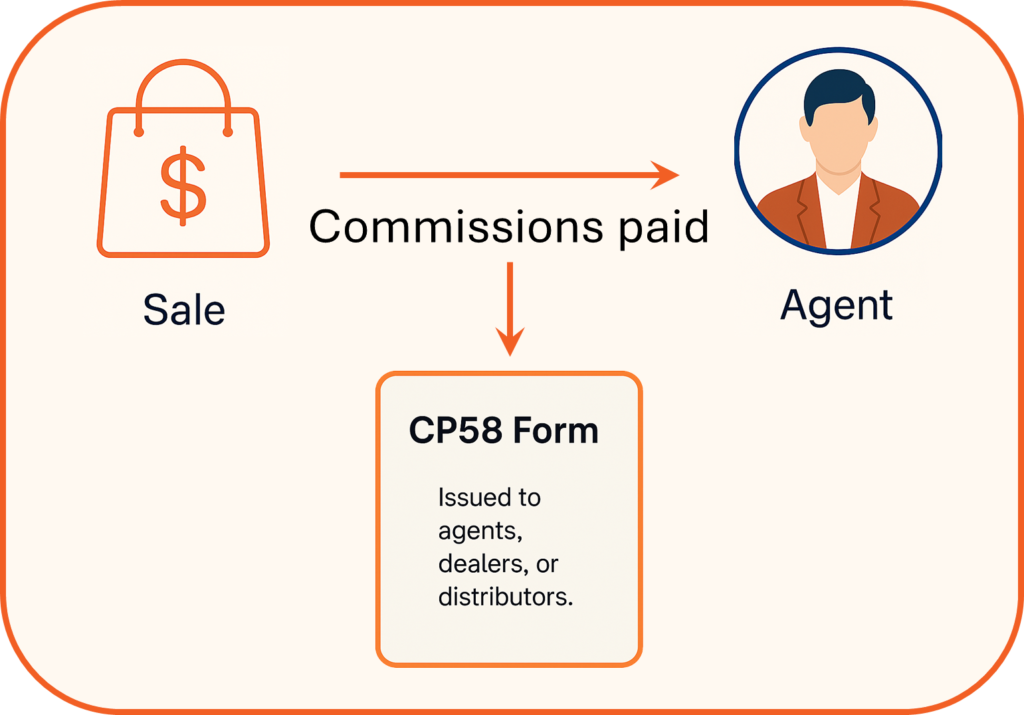
Form CP58 is a statement of monetary and non‑monetary incentive payments issued by a company to its agents, dealers, or distributors.
It is required under Section 83A(1) of the Income Tax Act 1967 and serves a similar purpose to Form EA, but for non‑employees.
In simple terms:
- Form EA – salaried employees
- Form CP58 – commission‑based agents, dealers, and distributors
CP58 helps recipients correctly declare income and allows LHDN to match deductible commission expenses with reported income.
Who Is Required to Issue Form CP58?
A company must issue CP58 if all the following apply:
- The company paid monetary and/or non‑monetary incentives
- To an agent, dealer, or distributor (not a salaried employee)
- The total value exceeds RM5,000 in a calendar year per recipient
This applies to Malaysian and foreign companies operating in Malaysia.
Common industries affected
- Real estate and property agencies
- Insurance agencies
- Direct selling/MLM companies
- Automotive distributors
- Referral‑based sales businesses
Is There a Threshold or Exemption?
RM5,000 Threshold
- If total incentives exceed RM5,000, CP58 is mandatory
- If below RM5,000, CP58 is not mandatory, unless requested in writing by the recipient
What Incentives Must Be Declared in CP58?
Must Be Included
- Sales commissions
- Performance or target bonuses
- Allowances linked to sales or output
- Non‑cash rewards, such as:
- Cars or motorcycles
- Travel packages
- Gadgets or luxury items
- Property incentives
Non‑cash incentives must be reported at actual cost incurred by the company.
What Is Typically Exempted from CP58?
The following are generally excluded, provided they are not performance‑based:
- Trade or bulk purchase discounts
- Credit rebates issued via credit notes
- Open public referral campaigns (not tied to individuals)
- Promotional items (e.g. calendars, pens, umbrellas)
- Reimbursements of business expenses
- Sub‑contractor payments and handling fees
- Management or professional service fees
Key rule of thumb:
If it’s performance‑based and individualized, it usually belongs in CP58.
What Information Does Form CP58 Contain?
According to LHDN’s official guide notes, CP58 includes:
Part A – Payer (Company) Details
- Company name
- Address
- Business registration number
- Income tax reference number
Part B – Recipient Details
- Name (individual or entity)
- NRIC/passport/company registration number
- Address
- Income tax number (if available)
Part C – Incentive Details
- Total cash incentives paid
- Total non‑cash incentives (at cost value)
- Basis year covered (1 Jan – 31 Dec)
Does Form CP58 Need to Be Submitted to LHDN?
No. CP58 is not submitted to LHDN.
The company must:
- Prepare CP58
- Furnish it to the agent/dealer/distributor
- Retain records for at least 7 years
LHDN may request CP58 during an audit or investigation, so proper record‑keeping is critical.
CP58 Deadline in Malaysia
31 March of the following year
Example:
- Incentives paid in 2025
- CP58 must be issued by 31 March 2026
See LHDN’s Employer Responsibilities guideline.
Penalties for Non‑Compliance
Failure to prepare or furnish CP58 may result in:
- Fines from RM200 to RM20,000
- Imprisonment for up to 6 months
- Increased audit exposure
Even where penalties are not immediately imposed, missing CP58 often triggers deeper scrutiny during tax audits.
Where to Download Form CP58
- LHDN Forms Download Page:
https://www.hasil.gov.my/en/forms/download-forms/ - CP58 Guide Notes:
https://www.hasil.gov.my/pdf/pdfam/Nota_Panduan_CP58_1.pdf
Final Takeaway
If your business pays significant commissions or incentives outside payroll, CP58 is a statutory obligation, even in the era of e‑Invoicing and self‑billing; CP58 still applies.
If you are unsure whether certain incentives should be reported, it is safer to document and disclose than to explain later during an audit.