Are Malaysian Businesses Ready for Work From Home in 2026?
Work From Home Is Back on the Agenda, But Are Malaysian Businesses Ready?
On 26 March 2026, Prime Minister Datuk Seri Anwar Ibrahim urged the private sector to implement work from home (WFH) arrangements, following similar measures introduced within the civil service.

The call comes amid global economic pressures stemming from geopolitical instability, rising energy costs, and disruptions to supply chains, all of which are affecting businesses and employees alike.
While the WFH suggestion is not a mandate, it sends a clear signal: flexibility and resilience are now business imperatives, not optional perks.
The real question for organisations today is not whether WFH should be implemented, but whether their business systems are ready to support it.
WFH Is No Longer a Pandemic Concept
It’s a Continuity Strategy
In his address, Anwar highlighted that several companies and banks have already adopted flexible work arrangements, encouraging others in the private sector to follow suit. This reinforces a reality many organisations learned during the COVID‑19 years: operations must continue, regardless of location.
WFH today is not about convenience. It is about:
- Reducing disruption during economic or energy shocks
- Ensuring business continuity during emergencies
- Maintaining productivity while controlling overhead costs
However, not all businesses will experience WFH in the same way. Some will transition smoothly. Others may struggle with delays, data silos, or compliance risks.
The difference lies in technology readiness.
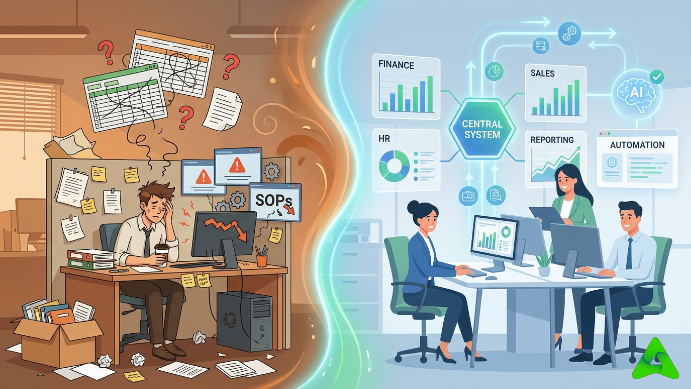
The Hidden Risk: Location‑Dependent Finance and HR Processes
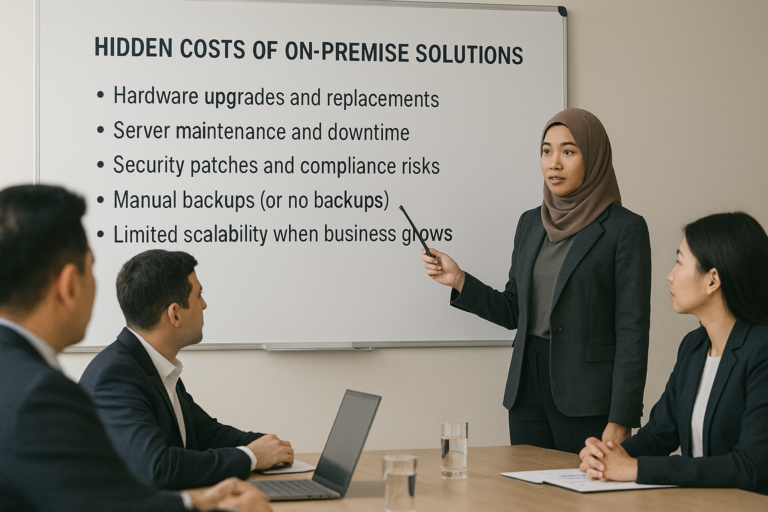
For many SMEs, accounting and payroll are still tied to on‑premise systems, physical servers, or office-based workflows. When teams work remotely, these setups can create bottlenecks such as:
- Delayed payroll processing
- Limited access to financial data
- Increased dependence on manual workarounds
- Higher risk of errors or non‑compliance
In a WFH environment, these risks can quickly undermine employee trust and operational stability.
And during times of economic uncertainty, cash flow visibility and payroll certainty are non‑negotiable.
Cloud Accounting and Payroll: The Backbone of Business Continuity
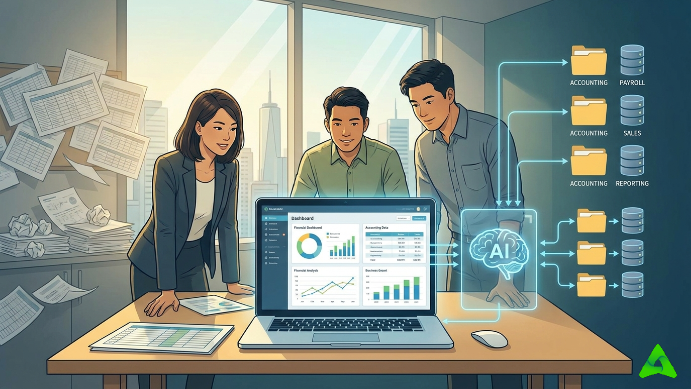
Businesses that have already adopted cloud-based accounting and HR & payroll systems are far better positioned to respond to Anwar’s WFH call.
Why?
Cloud systems allow finance and HR teams to:
- Access real‑time data securely from anywhere
- Run payroll on schedule, regardless of physical location
- Ensure statutory submissions and compliance remain uninterrupted
- Collaborate with management, auditors, and advisors remotely
As highlighted by government leaders, many companies have already been operating this way since the pandemic, proving that flexible work models are both feasible and sustainable when supported by the right infrastructure.
Work From Home Readiness Is a Competitive Advantage
The Human Resources Ministry has also encouraged flexible work arrangements, noting benefits such as improved work‑life balance, reduced commuting costs, and better resource optimisation for employers.
From a business perspective, organisations that are WFH‑ready gain:
- Faster decision‑making through real‑time financial insights
- Stronger employee retention and engagement
- Lower operational disruptions during external shocks
- Greater confidence in compliance and reporting
In contrast, businesses that delay digital transformation may find themselves reacting under pressure, rather than responding with confidence.
Asking the Right Question: Are You Ready?
Anwar’s advice to the private sector should be viewed as a strategic prompt rather than a temporary adjustment.
Whether WFH is used for cost management, employee well‑being, or crisis response, one thing is clear:
Business continuity depends on system accessibility.
If your accounting and payroll processes still rely on physical presence, fixed hardware, or manual handoffs, now is the time to rethink your setup.
Final Thought
WFH is no longer an emergency policy, it is part of a broader shift towards resilient, technology‑enabled businesses. Companies that have embraced cloud accounting and payroll will continue operating with minimal disruption, even as work patterns evolve.
As Malaysia navigates global economic uncertainty, the most prepared businesses will be those that invested early in systems that work wherever their people are.
Need Help Getting Your Business WFH‑Ready?
If your organisation is still relying on office‑based systems or manual processes, transitioning to a flexible work environment can feel overwhelming, but it doesn’t have to be.
Whether you’re:
- Unsure where to start with cloud accounting or payroll
- Concerned about payroll accuracy, compliance, or data security
- Experiencing bottlenecks when key finance or HR staff are not in the office
- Planning for WFH as part of a wider digital or business transformation
You don’t have to figure it out alone.
Getting the right cloud systems in place can help your business:
- Maintain uninterrupted payroll and accounting operations
- Give management real‑time visibility into finances from anywhere
- Support WFH without sacrificing control, compliance, or productivity
If you need guidance on assessing your current setup, choosing the right cloud tools, or planning a smooth transition, now is the best time to start the conversation, before disruption forces rushed decisions.
Reach out to explore how your business can transform its finance and payroll processes for a more resilient, flexible future.