Most Malaysian SMEs Don’t Have SOPs (and Why It’s Risky)
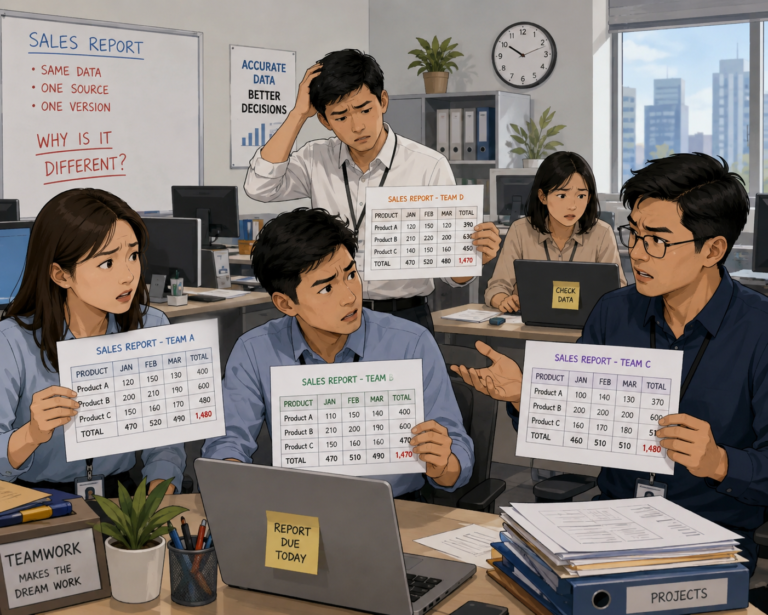
In many Malaysian small and medium-sized enterprises (SMEs), the idea of “standard operating procedures” (SOPs) sounds more like something for large corporations than day-to-day business reality.
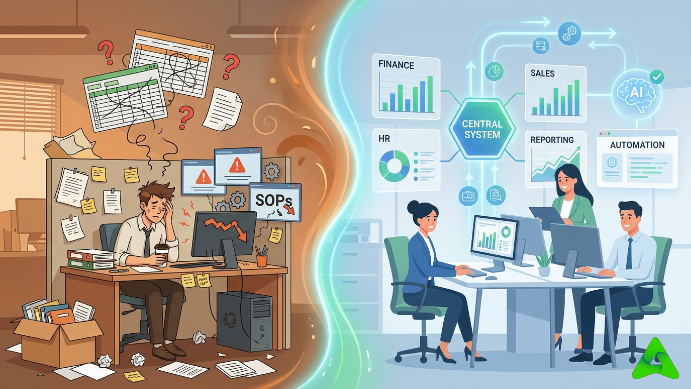
Instead, what exists is something far more fragile:
- Processes that live in one person’s head
- Spreadsheets that only one employee fully understands
- Accounting or payroll workflows built through years of trial and error
- “This is how we’ve always done it” as the main instruction manual
On the surface, this seems to work, until it suddenly doesn’t.
The Hidden Risk in SME Operations
The biggest risk is not inefficiency. It is dependency.
When a long-serving employee leaves, goes on extended leave, or is suddenly unavailable, many SMEs face the same problem:
Nobody else knows how things actually work.
It is not just about losing access to a file or system. It is about losing the logic behind the process:
- Why is this step done before that step?
- Why is this formula used in the spreadsheet?
- Why is this approval required?
- Why is this workaround in place in the accounting system?
Without answers to these questions, businesses are forced to rely on guesswork, and that is where errors, delays, and compliance issues begin to surface.
SOPs Are Not the Real Goal
Many SMEs think SOPs are simply about documenting steps:
Step 1 Step 2 Step 3
But this is only part of the picture.
A process map without context is just a diagram. It tells you what happens, but not why it happens.
And without understanding the “why”, employees may follow procedures blindly—even when the process no longer makes sense.
The More Important Question: “Why Does This Step Exist?”
A strong operational system is not just documentation. It is clarity.
When reviewing any business process, SMEs should challenge each step with questions like:
- Is this step still necessary, or is it legacy from an older system?
- What risk or problem does this step actually prevent?
- What happens if we remove or simplify it?
- Has technology made this step obsolete?
- Is this done for control, compliance, reporting, or habit?
In many cases, businesses discover that some steps exist simply because “that’s how it was set up years ago”.
Process Mapping Is a Start, Not the Solution
Process mapping helps SMEs visualise workflows, but it is only the beginning.
True operational strength comes when process mapping is combined with:
- Clear ownership (who is responsible, not just who is doing it)
- Documented rationale (why the step exists)
- System integration (reducing manual dependency where possible)
- Regular review (processes should evolve with the business)
Without these, even well-documented SOPs become outdated quickly.
The Real Cost of Not Having Proper SOPs
The absence of proper SOPs does not always show up immediately. But over time, it creates:
- Heavy reliance on key individuals
- Difficulty training new staff
- Inconsistent execution of tasks
- Increased risk of errors in accounting and payroll
- Bottlenecks in decision-making
- Business disruption during staff turnover
For SMEs aiming to scale, this becomes a major barrier.
Building Resilience, Not Just Documentation
SOPs should not be treated as paperwork for compliance or audits. They are a tool for business continuity.
A well-designed SOP system ensures that:
- Knowledge is shared, not siloed
- Processes can survive staff turnover
- Decisions are consistent and traceable
- The business is less dependent on any single person
This is where many SMEs begin transitioning from informal operations to structured, scalable systems.
Final Thought
If a business process only works because one person understands it, it is not a process, it is a risk.
The goal is not just to document what is done, but to understand why it is done that way, and whether it should continue at all.
That shift in thinking is what separates reactive SMEs from resilient ones.
At Adventus Business Consult, we often see businesses trying to scale while still relying on undocumented, person-dependent processes.
Strengthening SOPs is not about bureaucracy, it is about building businesses that can operate confidently, even when key people are not in the room.