Understanding Malaysia’s Minimum Wages Order 2024
If you’ve been keeping an eye on your payslip (or your business’s overheads), you’ve likely heard the big news: Malaysia has officially raised the bar. The Minimum Wages Order 2024 has set a new national floor of RM1,700 per month.
While the increase is a welcome boost for many, it’s also part of a much longer journey toward wage parity in Malaysia. Let’s break down how we got here and why this order is a bit of a historical milestone.

A Brief History: Why the Change?
The Minimum Wage policy was first introduced in Malaysia back in 2013 under the New Economic Model (NEM). The goal was simple but ambitious: move Malaysia from a middle-income economy to a high-income one.
Before 2013, wages were largely determined by market forces, which often left low-skilled workers behind. By setting a floor, the government aimed to:
- Alleviate poverty: Ensure workers could meet their basic needs.
- Reduce dependency on foreign labor: By making local wages more competitive.
- Drive productivity: Encouraging businesses to automate rather than rely on cheap manual labor.
Fast forward to 2024, and the leap to RM1,700 (up from RM1,500) was driven by the rising cost of living and post-pandemic inflationary pressures.
The Great Divide: East vs. West Malaysia
One of the most interesting parts of Malaysia’s wage history is that for a long time, the “National” minimum wage wasn’t actually national.
When the policy first launched in 2013, there was a significant gap between the Peninsular (West) and Sabah/Sarawak (East).
Year | Peninsular Malaysia (West) | Sabah, Sarawak & Labuan (East) |
|---|---|---|
2013 | RM900.00 | RM800.00 |
RM1,000.00 | RM920.00 | |
2019 | RM1,100.00 | RM1,100.00 |
Why the difference?
Historically, the government argued that the cost of living and business structures in East Malaysia were different. However, this created a “wage gap” that many argued was unfair to workers in the East.
It wasn’t until January 1, 2019, that the government finally unified the rates, acknowledging that a Malaysian worker’s time and effort should be valued equally, regardless of which side of the South China Sea they stood on.
The 2024 Rollout: What You Need to Know
The transition to RM1,700 isn’t happening overnight for everyone.
The government has opted for a phased approach to give smaller businesses some breathing room:
- February 1, 2025: The RM1,700 rate kicks in for employers with 5 or more employees and all professional employers (regardless of size).
- August 1, 2025: The rate becomes mandatory for all employers, including micro-SMEs with fewer than 5 employees.
Note: Just like previous orders, this does not apply to domestic servants (helpers/gardeners), who fall under different regulations.
Final Thoughts
Moving the needle to RM1,700 is a bold step. For workers, it’s a necessary adjustment to keep up with the price of a teh tarik and a plate of nasi lemak. For employers, it’s a prompt to look at efficiency and value-added services.
Whether you’re an employee or a business owner, staying informed is the first step to navigating these changes smoothly.
Partner with Adventus for Seamless Payroll Management
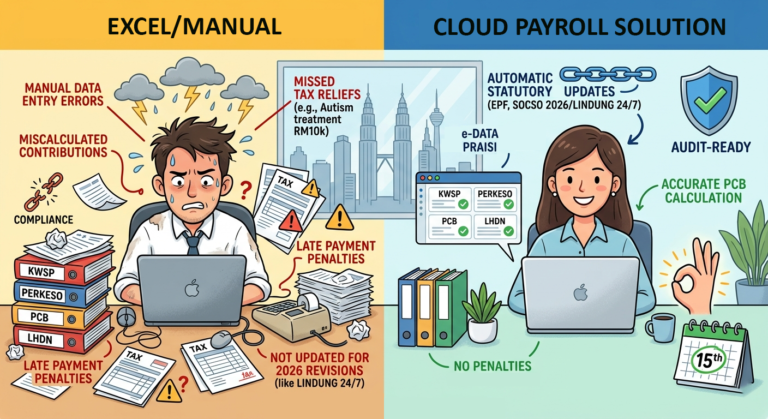
At Adventus, we specialize in taking the stress out of compliance. Our outsourced payroll services are designed to keep you ahead of regulatory changes like the RM1,700 mandate, ensuring your team is paid accurately and on time, every time.