Do all Sdn Bhd Businesses Need to Have Their Accounts Audited?
For many small and medium enterprise (SME) owners in Malaysia, operating a Sdn Bhd (Sendirian Berhad) company brings a structured set of statutory obligations.
Historically, one of the most significant annual milestones has been the mandatory statutory audit. However, with regulatory updates expanding the scope of audit exemptions, many directors are left asking: “Does my small business still need an auditor?”
The Starting Point: Section 267(1)
Under the statutory framework of the Companies Act 2016, the law remains clear at its baseline: every private company in Malaysia must appoint an auditor for each financial year to audit its financial statements before they are presented to shareholders. This is governed strictly by Section 267(1).
However, Section 267(2) provides the Companies Commission of Malaysia (SSM) with the authority to exempt specific categories of private companies from this mandatory requirement. This is intended to alleviate the financial and administrative burdens on smaller enterprises, allowing them to channel resources into scaling their business operations.
The 2026 Audit Exemption Criteria
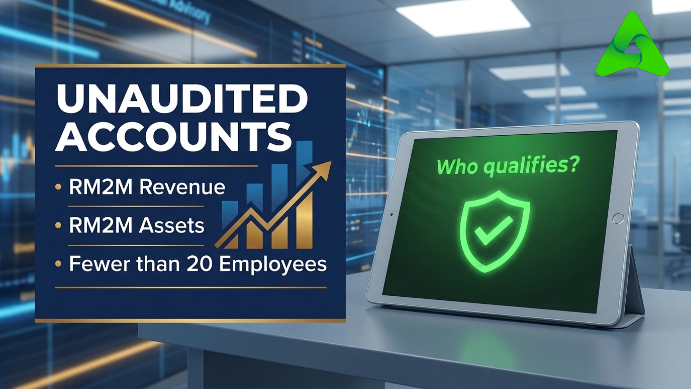
To qualify for a statutory audit exemption, your Sdn Bhd must satisfy the thresholds determined by SSM. For the current financial periods, a private company qualifies for audit exemption if it meets at least two out of the three following criteria:
Threshold Metric | Exemption Condition (Must meet at least 2) |
|---|---|
Annual Revenue | Total revenue does not exceed RM2,000,000 during the financial year. |
Total Assets | Total assets do not exceed RM2,000,000 at the end of the financial year. |
Employee Count | Has no more than 20 full-time employees throughout the financial year. |
The Timeframe Rule: Crucially, these thresholds are not analyzed in isolation for a single year. To successfully claim or maintain an audit exemption, your company must meet these criteria across the current financial year and the two immediately preceding financial years.
“Audit Exempt” Does Not Mean “Compliance Exempt”
A common misconception among business owners is that qualifying for an audit exemption eliminates the need to maintain formal financial records or professional frameworks. This is absolutely false. While you may save on formal external audit fees, an audit exemption does not relieve company directors of their statutory, legal, and fiduciary responsibilities.
If your Sdn Bhd operates under the audit exemption framework, the board of directors must ensure the absolute fulfillment of the following obligations:
1. Preparation of Unaudited Financial Statements
The company is still legally required to prepare a full set of financial statements in accordance with the Malaysian Financial Reporting Standards (MFRS) or Malaysian Private Entities Reporting Standards (MPERS).
These unaudited financial statements must include a Statement of Financial Position, Statement of Profit or Loss and Other Comprehensive Income, Statement of Changes in Equity, and a Statement of Cash Flows, accompanied by comprehensive explanatory notes.
2. The Directors’ Report and Statement
The directors must still prepare a formal Directors’ Report and a signed Directors’ Statement confirming that the financial statements give a true and fair view of the company’s financial position and performance.
In the case of unaudited accounts, the directors must also include an explicit declaration stating that the company qualifies for the audit exemption and that the shareholders have not requested an audit.
3. Strict Record-Keeping Under Section 245
Under Section 245 of the Companies Act 2016, company directors are personally responsible for ensuring that accounting and other records are kept in a manner that sufficiently explains the transactions and financial position of the company.
These records must be kept for at least seven (7) years and must be capable of being conveniently and properly audited should SSM, LHDN, or shareholders demand it.
4. Statutory Filing Deadlines Remain
Your unaudited financial statements, along with the Annual Return, must still be lodged with SSM within the statutory timelines (typically within six months from the financial year-end date).
Failure to do so results in late lodgement penalties and legal exposure for the directors.
Tax and Modern Compliance Considerations (LHDN & e-Invoicing)
Even if SSM grants your business an exemption from a statutory audit, you must remember that the LHDN operates under separate tax laws.
For corporate tax filing (Borang C), LHDN requires financial disclosures derived from properly maintained accounts.
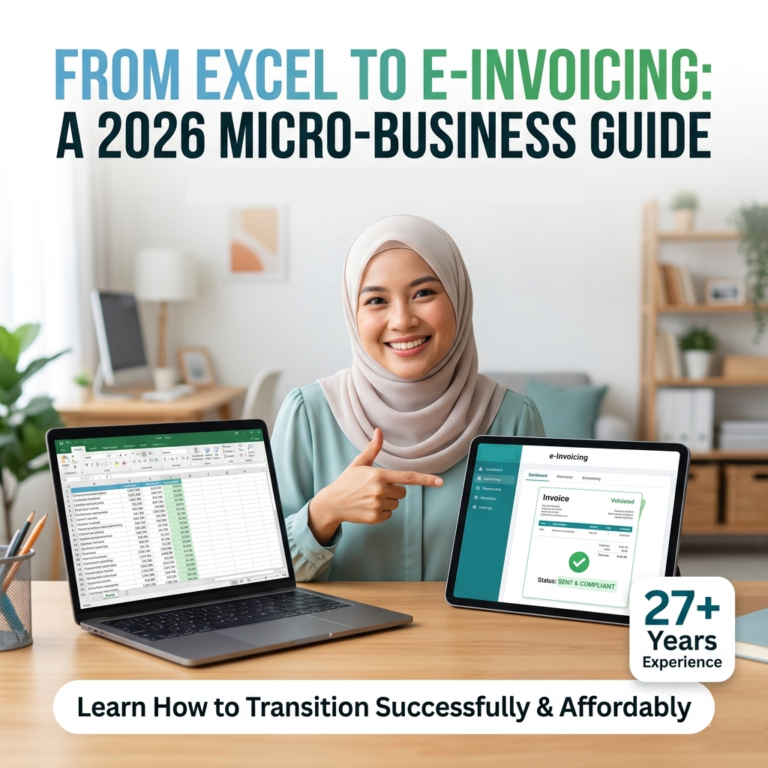
Furthermore, given the comprehensive integration of the MyInvois e-Invoicing framework across Malaysia, all commercial transactions must be digitally validated in real-time or near real-time.
This means your operational transaction data, accounting records, and final financial reporting must match seamlessly.
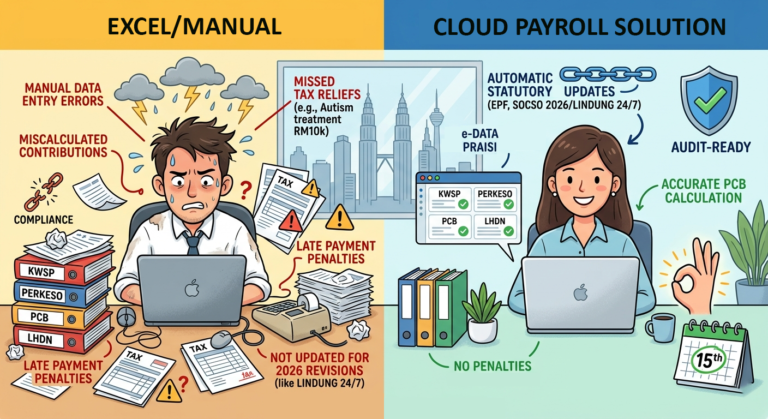
Operating without an auditor makes robust, compliant internal cloud accounting systems more critical than ever.
Should You Audit Anyway?
Many small businesses choose to undergo a voluntary audit even when they qualify for an exemption. A verified, audited financial report is highly beneficial if you intend to:
- Apply for commercial banking facilities, corporate loans, or government grants.
- Attract external investors or structure the business for a future sale/merger.
- Build high trust and credibility with key corporate suppliers and enterprise clients.
How Adventus Can Help
Transitioning to or managing an audit-exempt Sdn Bhd requires robust internal controls and clean, professional financial tracking.
At Adventus Business Consult, we specialize in helping SMEs implement cloud-based accounting solutions (such as Xero and Bukku), advising on corporate compliance, tax preparation, and navigating LHDN compliance requirements.
Unsure if your business qualifies for an exemption or need assistance preparing compliant unaudited financial statements?