Concentration Risk in Receivables Aging
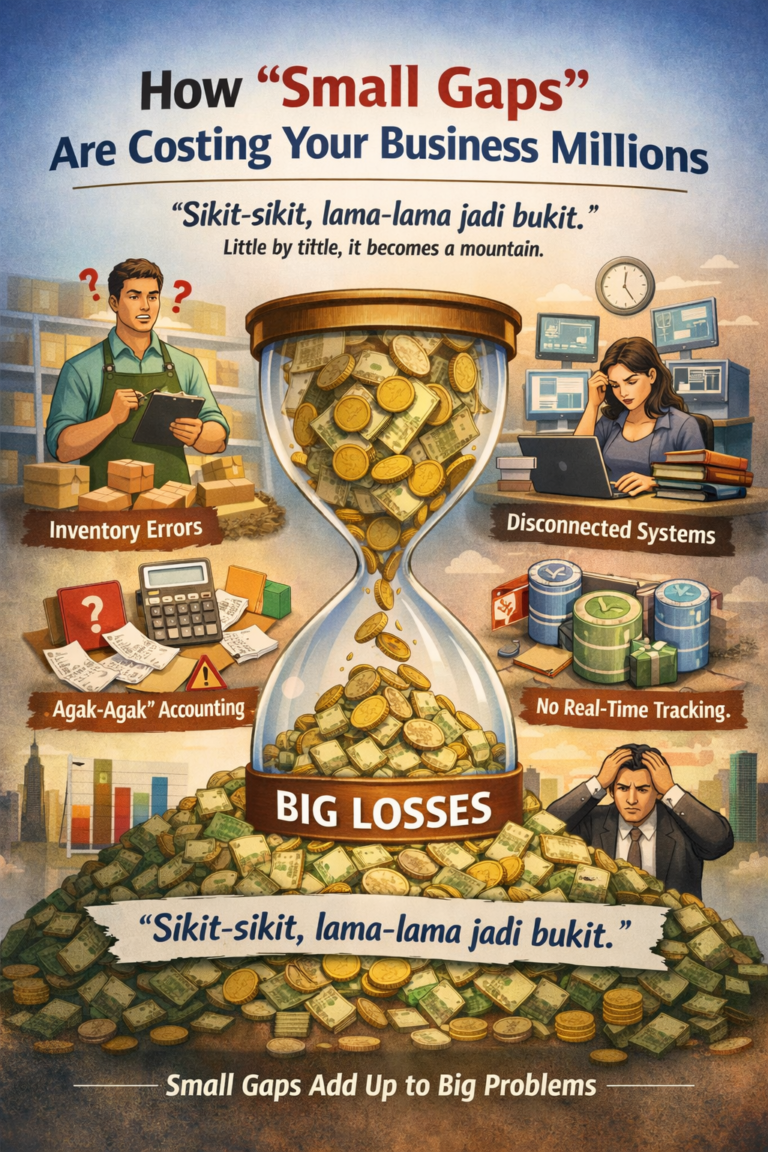
Your sales may be growing, but are your customers actually paying you?
Many business owners celebrate when revenue increases. More sales, larger customers, and higher monthly billings often indicate that the business is moving in the right direction.
However, behind those impressive sales figures could be a hidden risk, too much money tied up in a small number of customers who take too long to pay.
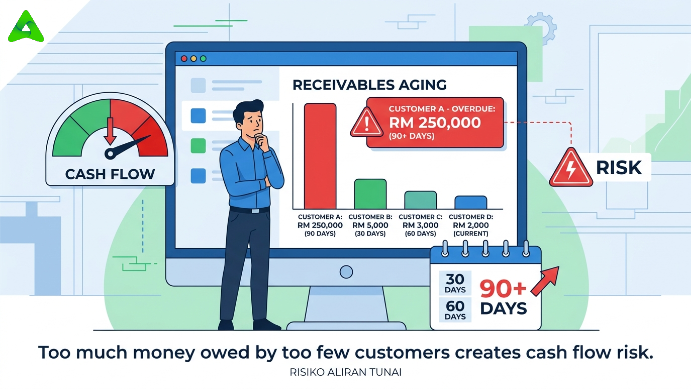
This is known as concentration risk in receivables aging.
For small and medium-sized businesses (SMEs), where cash flow is often the difference between growth and survival, understanding who owes you money and how long they have owed you is critical.
What Is Receivables Aging?
Receivables aging refers to the analysis of unpaid customer invoices based on how long they have been outstanding.
A typical receivables aging report categorises outstanding invoices into periods such as:
- Current (not yet due)
- 1–30 days overdue
- 31–60 days overdue
- 61–90 days overdue
- More than 90 days overdue
This post helps business owners answer an important question:
“Are my customers paying according to agreed credit terms?”
For example, if your normal credit terms are 30 days, but a large portion of your receivables are sitting in the 90-day or 120-day category, this is a warning sign.
What Is Concentration Risk in Receivables?
Concentration risk happens when a significant portion of your outstanding receivables comes from a small number of customers.
For example:
Customer A | Customer B | Customer C | |
|---|---|---|---|
Outstanding balance | RM300,000.00 | RM50,000.00 | RM30,000.00 |
Total receivables: RM380,000
Although the business may have dozens of customers, almost 80% of the money owed is concentrated with one customer.
This creates a dependency risk.
If Customer A delays payment, disputes the invoice, experiences financial problems, or suddenly stops buying from you, your business cash flow could be severely affected.
Why Receivables Concentration Is Dangerous
1. Revenue Does Not Equal Cash
One of the biggest mistakes business owners make is assuming that sales growth automatically means a healthier business.
A company can be profitable on paper but still struggle to pay:
- Salaries
- Suppliers
- Rental
- Loans
- Taxes
- Operating expenses
because customers have not paid their invoices.
For example:
You invoice a customer RM500,000 in sales.
Your profit margin may look attractive, but if that customer takes 180 days to pay, your business may need to finance six months of operations while waiting for cash.
2. A Large Customer Can Create a False Sense of Security
Having a major customer is usually positive.
Large customers can provide:
- Stable sales volume
- Predictable revenue
- Business credibility
However, over-reliance on one or two customers can become dangerous.
Ask yourself:
“If my biggest customer stopped buying tomorrow, would my business survive?”
If the answer is no, your business may have customer concentration risk.
3. Long Outstanding Balances May Indicate Problems
A customer who consistently delays payment may indicate:
Cash flow problems
The customer may be struggling financially and using your business as an informal source of financing.
Poor payment discipline
Some companies intentionally delay payments because suppliers allow it.
Disputes or operational issues
Long overdue invoices may also indicate:
- Incorrect invoices
- Missing purchase orders
- Delivery disputes
- Quality complaints
- Approval delays
The longer an invoice remains unpaid, the harder it often becomes to collect.
Warning Signs Business Owners Should Look Out For
1. One Customer Makes Up a Large Percentage of Receivables
Review your receivables by customer.
Ask:
- Which customers owe the most money?
- What percentage of total receivables do they represent?
- Are we comfortable with this level of exposure?
A healthy business should avoid depending too heavily on a small number of debtors.
2. Customers Regularly Exceed Credit Terms
If your agreed credit terms are 30 days, but customers regularly pay after 90 days, something needs to change.
Monitor:
- Average collection period
- Payment trends by customer
- Repeat late payers
A customer who pays late every month is effectively using your money to fund their business.
3. Old Receivables Keep Increasing
Pay attention to trends.
A receivables aging report that shows:
- Increasing overdue balances
- More invoices moving into 60–90 days
- Growing balances above 90 days
is a warning that your credit control process may need improvement.
4. Sales Growth Is Driven by Customers Who Pay Slowly
Not all revenue is equal.
A RM1 million customer who pays within 30 days may be healthier than a RM2 million customer who takes 180 days to pay.
Business owners should evaluate customers based on:
- Revenue contribution
- Profit margin
- Payment behaviour
- Credit risk
How Can SMEs Reduce Receivables Concentration Risk?
1. Monitor Receivables Aging Regularly
Do not wait until year-end to review outstanding balances.
A monthly review should include:
- Top debtors
- Overdue invoices
- Collection status
- Credit exposure by customer
Your accounting system should make this information easily accessible.
2. Set Appropriate Credit Limits
Not every customer should receive unlimited credit.
Consider setting:
- Maximum credit limits
- Payment milestones
- Deposits for large projects
- Progress billing arrangements
This reduces exposure if a customer encounters financial difficulties.
3. Strengthen Credit Control Processes
Simple improvements can make a big difference:
- Issue invoices promptly
- Confirm payment terms upfront
- Follow up before invoices become overdue
- Resolve disputes quickly
- Escalate overdue accounts
Good credit control is not about chasing customers aggressively, it is about protecting your business cash flow.
4. Diversify Your Customer Base
Growing sales from existing customers is important, but businesses should also continue developing new customers.
A broader customer base reduces dependence on any single account.
Use Your Accounting Data as a Business Decision Tool
Many SMEs view accounting reports as something prepared mainly for compliance and tax purposes.
However, reports such as:
- Receivables aging
- Customer sales analysis
- Gross profit by customer
- Cash flow forecasts
can provide valuable insights for business decisions.
The question is not only: “How much did we sell?”
The more important questions are:
- “Who owes us money?”
- “How long will it take before we receive payment?”
- “Are we taking too much risk with certain customers?”
Final Thoughts
A strong sales pipeline does not guarantee a financially healthy business.
For SMEs, cash flow risk often hides within outstanding receivables. A business may appear successful while quietly becoming dependent on a few customers who owe significant amounts of money.
By regularly reviewing receivables aging and identifying concentration risks early, business owners can make better decisions, protect cash flow, and build a more resilient business.
At Adventus Business Consult, we help SMEs move beyond basic bookkeeping by turning accounting data into actionable business insights.
Through outsourced accounting services and cloud accounting solutions, we help business owners understand their numbers and make better-informed decisions.