Inventory Looks Fine… So Why Are Profits Off?
Why Your Inventory Doesn’t Match Your Profits
(And What to Do About It)
Many Malaysian SMEs assume a simple relationship:
If sales are strong, profits should follow.
But then reality hits.
Your sales look healthy. Your inventory records seem “about right.”
Yet your profits don’t reflect what you expected.
This mismatch isn’t just frustrating—it’s a warning sign.
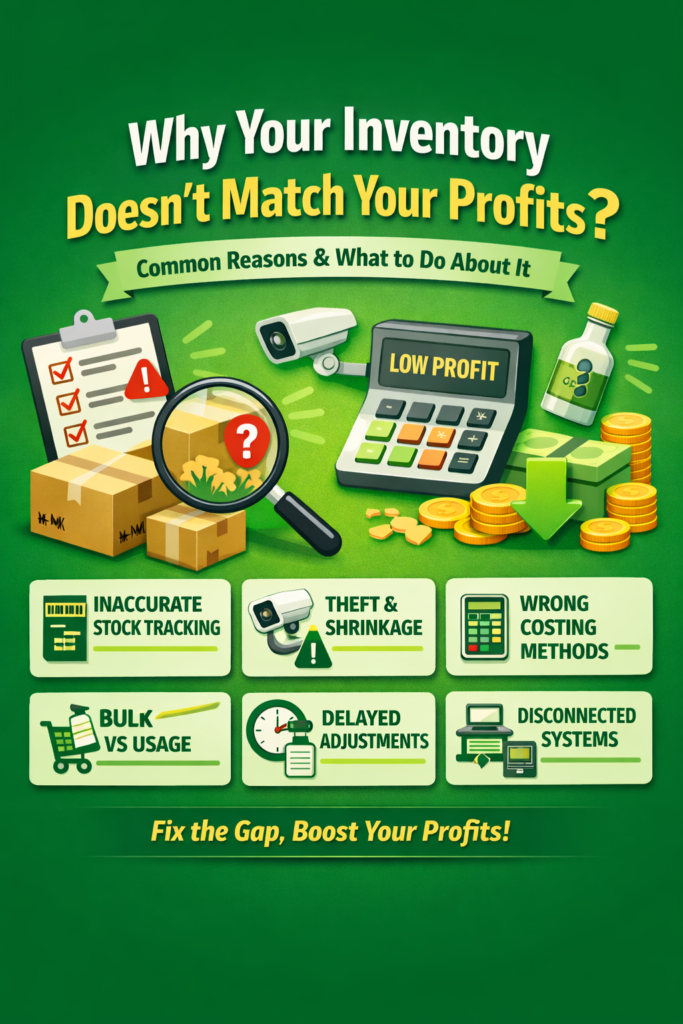
Let’s break down why this happens and what you can do about it.
The Hidden Disconnect Between Inventory and Profit
Inventory directly affects your Cost of Goods Sold (COGS), which in turn determines your profit.
If inventory is inaccurate, your profits will be too.
Here’s where things typically go wrong:
1. Inaccurate Stock Tracking
Many SMEs rely on:
- Manual spreadsheets
- Periodic stock counts
- “Rough estimates”
Over time, small discrepancies build up:
- Missing items
- Double-counted stock
- Unrecorded usage
Impact:
COGS becomes unreliable while profits are overstated or understated.
2. Shrinkage (Losses You Didn’t Account For)
Shrinkage includes:
- Theft
- Damage
- Expiry (especially for F&B, clinics, and retail)
- Misplacement
If these aren’t recorded properly, your system assumes the inventory still exists.
Impact:
You think you have more stock than you actually do, profits look artificially high, until a stocktake forces a correction.
3. Incorrect Costing Methods
Are you using:
- FIFO (First-In, First-Out)?
- Weighted Average Cost?
- Something inconsistent?
If costing methods are:
- Applied incorrectly
- Changed without proper adjustments
Your margins can swing unpredictably.
Impact:
Profit figures become inconsistent and misleading.
4. Bulk Purchases vs Actual Usage
This is especially common in:
- Medical clinics
- Manufacturing
- F&B businesses
You buy in bulk—but consume in small quantities.
If usage isn’t tracked accurately:
- Expenses may be recorded too early (when purchased)
- Or too late (when stock is written off)
Impact:
Profit fluctuates month-to-month without a clear reason.
5. Unrecorded or Delayed Adjustments
Stock adjustments often happen:
- At month-end
- During audits
- When “something feels off”
But delays in recording:
- Damaged goods
- Returns
- Internal usage
create timing mismatches.
Impact:
Your financial reports don’t reflect reality in real time.
6. Disconnected Systems
If your:
- POS system
- Inventory system
- Accounting software
aren’t integrated, data gaps are inevitable.
Impact:
Sales, stock, and financial data don’t align, leading to confusion and poor decisions.
What You Can Do About It
Fixing this doesn’t require a complete overhaul—but it does require discipline and the right systems.
1. Implement Real-Time Inventory Tracking
Use cloud accounting or inventory systems that:
- Update stock automatically with each sale
- Reduce manual intervention
2. Standardise Your Costing Method
Choose a method (e.g. FIFO or weighted average) and:
- Apply it consistently
- Review it periodically with your accountant
3. Perform Regular Cycle Counts
Instead of waiting for year-end:
- Count high-value or fast-moving items regularly
- Identify discrepancies early
4. Record Adjustments Immediately
Don’t wait until month-end.
Log:
- Damaged goods
- Expired stock
- Internal consumption
as they happen.
5. Integrate Your Systems
Ensure your:
- Sales
- Inventory
- Accounting
systems “talk” to each other.
This reduces duplication and errors.
6. Work With an Accounting Partner
Inventory isn’t just an operational issue, it’s a financial one.
A structured accounting approach helps:
- Align inventory with financial reporting
- Identify margin leaks
- Provide real-time insights
Final Thoughts
When your inventory doesn’t match your profits, it’s rarely a single big mistake.
It’s usually a series of small gaps—in tracking, timing, and systems.
Left unchecked, these gaps can:
- Distort your financial position
- Lead to poor decisions
- Impact cash flow
But once you fix the process, everything changes:
- Clearer margins
- More reliable reporting
- Better business decisions
Need Help Fixing the Gap?
At Adventus Business Consult, we help Malaysian SMEs:
- Align inventory with financial reporting
- Implement practical systems (without disrupting operations)
- Gain real-time visibility into their business performance
Contact us today to find out how we can help you turn your numbers into accurate, actionable insights.