Beyond Debits and Credits
How Small Business Owners Should Really Evaluate Accounting Software.
It’s true that at a foundational level, all accounting solutions look alike. They record debits and credits, produce an income statement and balance sheet, and can generate a trial balance when needed. As a result, many small business owners focus on superficial similarities instead of assessing whether the solution can deliver meaningful reporting and operational efficiency.
But if accounting software were only about bookkeeping, growth-oriented businesses wouldn’t struggle as much as they do with cash flow visibility, operational control, and decision-making. The reality is this: the value of an accounting solution lies not in what it records, but in what it helps you understand and act on.
For small businesses working within tight budgets and relying on entry-level solutions, here are the factors that matter far more than basic accounting functionality.
1. Cash Flow Visibility, Not Just Profit
Many small businesses fail even though they are “profitable on paper.” That’s because standard financial statements are often backwards-looking, while small business survival depends on forward-looking cash awareness.
When evaluating an accounting solution, owners should ask:
- Can I easily see what cash is coming in and going out right now?
- Can I track outstanding receivables and payables without exporting data?
- Does the system help me identify late-paying customers quickly?
Even a basic system should make cash flow highly visible, not buried inside reports that require accounting knowledge to interpret. If a business owner cannot immediately understand their cash position, the software is working against them.
2. Ease of Use for Non-Accountants
Most small businesses do not have in-house accountants. The people using the system are often the owner, an administrator, or an operations manager, juggling multiple responsibilities.
An entry-level accounting solution should:
- Use plain language rather than accounting jargon where possible
- Require minimal training to perform daily tasks
- Make it difficult to accidentally post errors that are hard to reverse
If a system requires frequent external help just to perform routine tasks, its true cost increases very quickly, both financially and operationally.
3. Meaningful, Customisable Reporting
Standard reports are a starting point, not the end goal. What matters is whether reports can be adapted to how the business actually operates.
Owners should consider:
- Can reports be filtered by department, location, project, or customer?
- Can I quickly compare this month versus last month or this year versus last year? (see Comparative Financial Statements for Better Business Decisions)
- Do reports help me answer real questions, such as “Which services are most profitable?” or “Which customers cost us the most to serve?”
For small businesses, reports should drive decisions, not simply satisfy compliance requirements.
4. Scalability Without Complexity Shock
Most small businesses are not looking for enterprise systems, but they do want room to grow. A common mistake is choosing a system that works today but becomes a bottleneck within 12–24 months.
Key questions to ask:
- Can this solution handle a higher transaction volume without slowing down?
- Can I add users or basic features as the business grows?
- Will I need to completely replace the system once growth starts?
Entry-level solutions should support gradual growth without forcing a painful system change at the first sign of success.
5. Integration with Day-to-Day Operations
Accounting does not exist in isolation. It touches sales, purchasing, inventory, payroll, and sometimes even customer service.
Even on a limited budget, businesses should consider:
- Can the system work smoothly with invoicing and collections?
- Does it reduce duplicate data entry?
- Can it integrate (now or later) with tools the business will need to use.
Every manual workaround introduces errors, delay, and frustration, costs that often exceed the price of better software.
6. Compliance, Audit Trails, and Future Readiness
Many small business owners think compliance only matters when they get “bigger.” In reality, clean records and clear audit trails protect the business from day one.
A good accounting solution should:
- Maintain clear transaction histories
- Prevent unauthorised changes or deletions
- Make it easy to respond to auditors, lenders, or tax advisors
Businesses seeking financing or investment will quickly discover that poor accounting systems slow down or even derail opportunities.
7. Total Cost of Ownership, Not Sticker Price
For budget-conscious businesses, cost matters, but price should not be evaluated in isolation.
Owners should look beyond the subscription fee and consider:
- Training time
- External accounting or IT support costs
- Time spent correcting errors or rebuilding reports
- Potential replacement costs in the near future
The cheapest solution can become the most expensive if it limits visibility, efficiency, or growth.
Perpetual Doesn’t Mean Free Forever
It’s also important to understand that perpetual licensing does not mean a one‑time cost.
While the initial licence fee may be paid upfront, businesses still need to budget for ongoing expenses such as annual support and maintenance, version upgrades, regulatory or compliance updates, and sometimes additional modules as needs evolve.
Over time, these costs can be significant, particularly if upgrades are required to remain compatible with operating systems, databases, or third‑party tools.
When evaluating total cost of ownership, owners should look beyond the initial purchase price and consider what it will realistically cost to keep the system supported, current, and usable over the life of the business.
The Bigger Picture: Accounting as a Management Tool
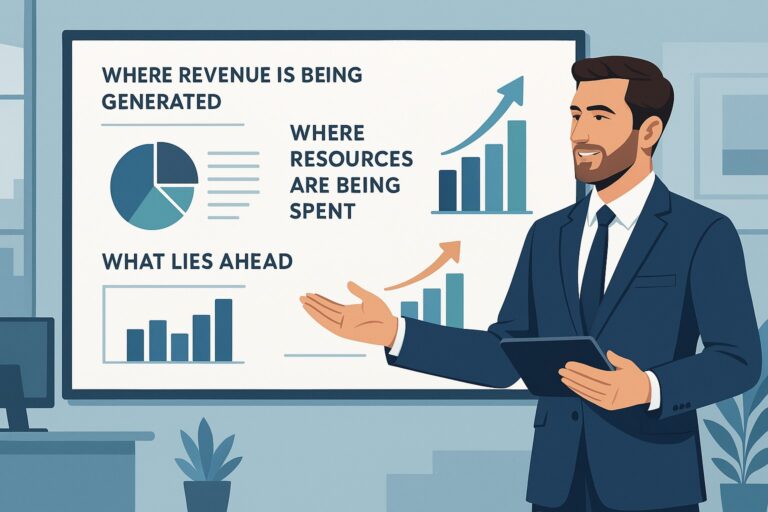
At its best, accounting software is not just a record-keeping system; it is a management tool.
It should help owners understand what is happening in their business, where risks are emerging, and where opportunities exist.
Choosing the right solution is less about “features” and more about fit: how well the system aligns with the business model, operational complexity, growth plans, and available resources.
Getting the Right Advice Matters
Small business owners don’t need the “most powerful” system—they need the right one. That requires stepping back, understanding how the business truly operates today, and being realistic about where it is heading.
Adventus works with business owners to evaluate accounting solutions based on business needs, growth plans, and budget realities, helping them select a best-fit approach that supports both control today and growth tomorrow.